Newsletter
Sign up for our newsletter for information on our latest products and promotions.
Sign up for our newsletter for information on our latest products and promotions.

Please confirm that you are of legal age
to purchase alcohol in your region.
You currently have an active checkout session
open already, would you like to clear it?


1257 Kensington Road NW
1 (403) 283-8000 / atyourservice@kensingtonwinemarket.com
$3,799.99
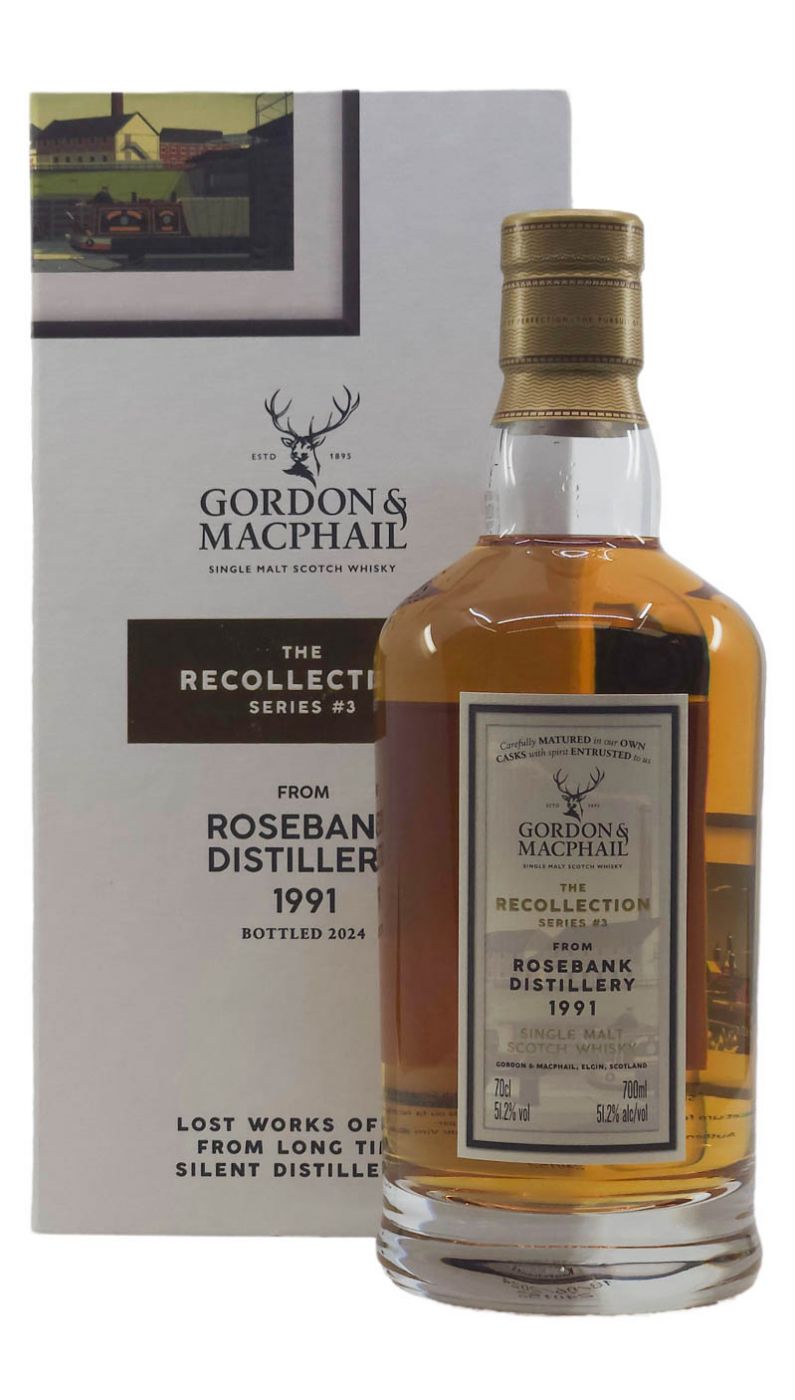
This 1991 vintage Rosebank has been bottled as a part of the Recollection Series 3 at 51.2% after 32 years in a First Fill ex-Bourbon Barrel.
Producer Description
"The history of Rosebank Distillery has been directly linked with the Forth & Clyde canal which sits in its shadow. The waterway linked Scotland’s west and east coasts, and therefore its two main cities, Glasgow and Edinburgh. A distillery called Rosebank was operating as early as 1817. From 1840, under the ownership of the Rankine family, Rosebank prospered. The canal, however, became neglected and the distillery eventually closed its doors in 1993. It was reopened under new ownership to great fanfare in 2024. This release, a lost work of art, is one of the oldest and rarest Rosebank single malts ever released."
700 ml Low StockProducer Tasting Note
Nose: Fragrant gorse flower aromas intertwine with lime zest and a hint of milk chocolate. Dried banana notes come to the fore alongside an undertone of peanuts.
Taste: Sweet honeycomb flavours give way to subtle guava and passionfruit. Smooth poached pear leads to vanilla fudge.
Finish: Medium-bodied with creamy apple and tropical fruit.
90pts Whisky Fun
"This venerable 1991 probably adds another gem to a lineage that has proven exceptional at various ages. Colour: gold. Nose: unmistakably Rosebank in its elegant fruitiness, though comparisons with other greats come to mind. Glorious waves of mangoes and passion fruits lead the charge, followed by fragrant orange blossom and ripe yellow melon. A bright zestiness of lemons and tangerines emerges, interwoven with acacia honey, a hint of chalk, and the comforting flakiness of fresh croissants. Simplicity belies brilliance here, with an almost dazzling precision that makes one muse that such barrels could endure yet another 32 years—alas, not this one. With water: a more fermentative edge, offering notes of freshly baked bread, a whiff of gueuze, and lemony hops. Mouth (neat): a strikingly clear and zesty profile persists, seemingly untouched by age. A vivid array of citron, lemon zest, and grapefruit pulp dances alongside a drizzle of acacia honey and a soft touch of rosehip tisane, which gently rounds the edges. It’s surprising to think this came from a first fill bourbon cask, given its elegant restraint reminiscent of a refined refill. With water: it becomes herbaceous, with pronounced fresh bread notes, before grapefruit asserts itself more boldly. Finish: long, with a remarkable and lively tension for its age—pure Rosebank in essence. Comments: it would be intriguing to see a real expert write a few lines on the lifespan expectations of a whisky at birth, factoring in both cask and distillate. SGP:661 - 90 points."
Adapted from an article written for Celtic Life Magazine by Andrew Ferguson:
In 1895 James Gordon and John Alexander MacPhail opened a grocery business in the City of Elgin, the heart of Scotland’s Speyside whisky region. The business sold groceries, tea, coffee and wines from all over the world. 125 years later, Gordon & MacPhail still operates the grocery business in Elgin, but its real enterprise is as an Independent Bottler and Distiller of Scotch Whisky.

In the early years of the business Gordon and MacPhail brought in a young John Urquhart as apprentice. Urquhart had a knack for selecting and blending whiskies from local distilleries. He also began brokering casks and independently bottling single malt from famous distilleries like Glenlivet, Mortlach and Glen Grant. The practice of filling casks of new make whisky, rather than simply purchasing mature casks began at this time. This is something which sets Gordon MacPhail apart from almost all other independent bottlers to this day, and it gave them a leg up through leaner years. In 1915 John Urquhart was made senior partner, and though the firm would keep its name, from this point on it would remain privately owned by the Urquhart family.
In 1933 George Urquhart, aka “Mr. George”, joined his father in the business. He was heavily involved in the firm’s whisky business, travelling widely to showcase Gordon & MacPhail whiskies. G&M’s business thrived during and after World War II. Having had the foresight to lay down large numbers of casks in the 1930s and early 1940s, they were in a strong position to meet demand, especially in America. This was a difficult time for most of the industry with barley rationing dramatically reducing distilling.

In 1968, under George Urquhart’s leadership, Gordon & MacPhail launched the Connoisseurs Choice range. At a time when few distilleries were bottling their own whisky as single malt (rather producing it for use in Blended Scotch whiskies), Gordon & MacPhail began marketing single malts from distilleries across Scotland. The range is still being bottled today.
The third generation began entering the business with George’s son Ian Urquhart in 1967. He was joined by David Urquhart in 1972, as well as Michael Urquhart and Rosemary Rankin in 1981. The family firm continued to thrive even during the industry downturn of the 1980s and ear 90’s, emerging as the undisputed preeminent independent bottler of Scotch whisky. In the 2010s the torch was passed to the 4th generation, with at least five of John Urquhart’s descendants now involved in the business.

It had always been John Urquhart’s vision for the family to own a distillery of its own. The dream was finally realized in 1993 with the acquisition of the closed Benromach Distillery in the nearby town of Forres. The distillery was in rough shape, and it took nearly 5 years to get it up and running. HRH Prince Charles was on hand in 1998 for its official reopening. Never content to rest on their laurels, the firm announced plans in 2019 to open a brand-new distillery in the Cairngorms National Park. The Cairn Distillery is scheduled to open in 2022.
One of the most remarkable things about Gordon & MacPhail is the vision it had to mature whiskies to great ages. Few other whisky firms, whether distilleries or independent bottlers, have ever had the foresight to mature casks for more than 30 or 40 years. In 2010 G&M bottled the Generations Mortlach 70 Years Old, which was the oldest whisky ever bottled at the time. They followed up on that milestone by bottling 70-year-old Glenlivet in both 2011 and 2012. And then in 2015 they once again they raised the bar by bottling the Generations Mortlach 75 Year. Of the 10 oldest whiskies ever bottled, all but 2 have been bottled by G&M.

It is almost certain that Gordon MacPhail will one day bottle the first ever one-hundred-year-old whisky, but that may still be a couple of decades away. Their oldest maturing stocks are from the late 1930s and early 1940s. A number of these casks, 15 First Fill Sherry Butts to be precise, were filled for Gordon & MacPhail at the Glenlivet Distillery on February 3rd, 1940. Most of these casks have been bottled over the decades, but G&M dipped into another of these casks this year to bottle another whisky. The Generations Glenlivet 80 Year, once more the oldest bottle of Scotch Whisky ever bottled. It isn’t inexpensive, but I can vouch for it in one regard… it doesn’t disappoint!
Gordon & MacPhail whiskies can be found all over the world with whiskies ranging from under $100 to $100,000.00 or more. Their grocery shop in Elgin is the brand's spiritual home, with a section dedicated to Scotch Whisky that showcases more than 1000 bottles. Prior to Covid-19 the shop offered both tastings and in-store sampling. As does their nearby Benromach Distillery in Forres, one of the smallest and most traditional distilleries in the Speyside.

The following was writted by Andrew Ferguson for the August 2023 issue of Celtic Life Magazine!

To many an afficionado there has never been a finer Lowland single malt than Rosebank. The spirit - true to traditional Lowland style - was triple distilled, and made from unpeated malt, giving the whisky a delicate, floral, and fruity character. The reasons for its closure in 1993 never satisfied curious anoraks, even though its reputation and popularity grew in the decades that followed.
Nearly a third of all of Scotland’s distilleries closed in the 1980s and 1990s, beginning in the annus horribilis of 1983. Some distilleries were shuttered forever, while a few others were more fortunate, reopening in the late 90s and in the first decade of the new millennium as the industry recovered. Rosebank was one of the last distilleries to silence its stills (1993), but 30 years after going into mothballs it is set to rise like a proverbial phoenix from its ashes in the months ahead.
Rosebank Distillery first opened its doors in 1840, near Falkirk, along the Forth-Clyde Canal. But local legend insists that a distillery known as Rosebank was operating at the hands of the Stark brothers on-or-near the present site in 1798. That may be the same Rosebank Distillery which a James Robertson was apparently running in 1817. Though it may have a more ancient heritage, the current Rosebank Distillery didn’t legally open until 1840.
Rosebank as we know it was built by James Rankine, who had previously purchased the maltings belonging the Camelon Distillery on the other side of the canal. Curiously, there are records indicating that the Stark family connected with Rosebank was running Camelon in 1827. Rosebank was quickly a roaring success and expanded its operations in 1845. In 1961, it acquired the site of the old Camelon Distillery, demolishing it to make way for a new malting plant.
The facility operated almost continuously (save for the war years) right up until 1993, when its production was deemed redundant by its owner UDV, a forbearer of Diageo (the world’s largest drinks company). UDV owned three Lowland Distilleries at the time, Bladnoch, Glenkinchie, and Rosebank, and it only needed one of them. Rosebank was a highly regarded malt, so why did they close the only of the three distilleries that made a traditional, triple-distilled Lowland single malt?
A few years before the closure, in 1988, UDV selected six of its 30-odd distilleries to be marketed as The Classic Single Malts of Scotland, and to represent the Lowlands they selected Glenkinchie. The oldest and least likely explanation I recall hearing is that they gave preference to Glenkinchie because its name sounded more Scottish. A more plausible explanation surrounds the Forth & Clyde canal, which was in a desperate state by the early 1990s. Why build a brand and tourist attraction next to a stagnant canal?
The reasons given by the UDV at the time pertain to road access to the site, and the estimated £2m tab to repair the distillery’s effluent plant.
Whatever the reason, the distillery sat silent for decades. Persistent rumours of its imminent reopening were just the product of wishful thinking on the part of whisky enthusiasts. As time passed, and interest in single malt grew, more and more attention came to be paid to silent distilleries like Rosebank.
 The whisky had many devoted admirers, but never quite gained the same cult status of other closed distillery malts like Brora and Port Ellen. As its fame slowly grew, its buildings were mostly sold off or repurposed, and hope seemed lost that it would ever reopen.
Then, in 2017, Ian MacLeod Distillers, owners of Glengoyne and Tamdhu, shocked the whisky world by announcing they had acquired the site of the old Rosebank Distillery, and that they would be bringing it back to life. It has taken six years, longer than they had originally hoped, but Rosebank will soon begin producing spirit again. It will be years before the spirit from the restored Rosebank Distillery will legally be whisky, and years more until it has the maturity to satisfy fans of the
Rosebank of old. However, there will be a visitor center and a place for fans of the whisky to pay homage.
It is still possible to purchase bottles of Rosebank produced before the stills fell silent. Ian Macleod has released a couple of official bottlings since taking over, but they don’t come cheap. The most recent release of Rosebank 31 Year retails for nearly $4,000.00.
Independent bottlings are increasingly rare, but are still trickling out, and a bit more affordable than the official bottlings. Elixir Distillers has nearly depleted their stocks of their “Rosebank the Roses” releases. The most recent release, Rosebank 21 Year (it was put in to glass a decade ago) Unity is retailing for about $2,000.00 in Canada, and is sold out in the U.K., where it is selling at auction for double that!
$6999.99
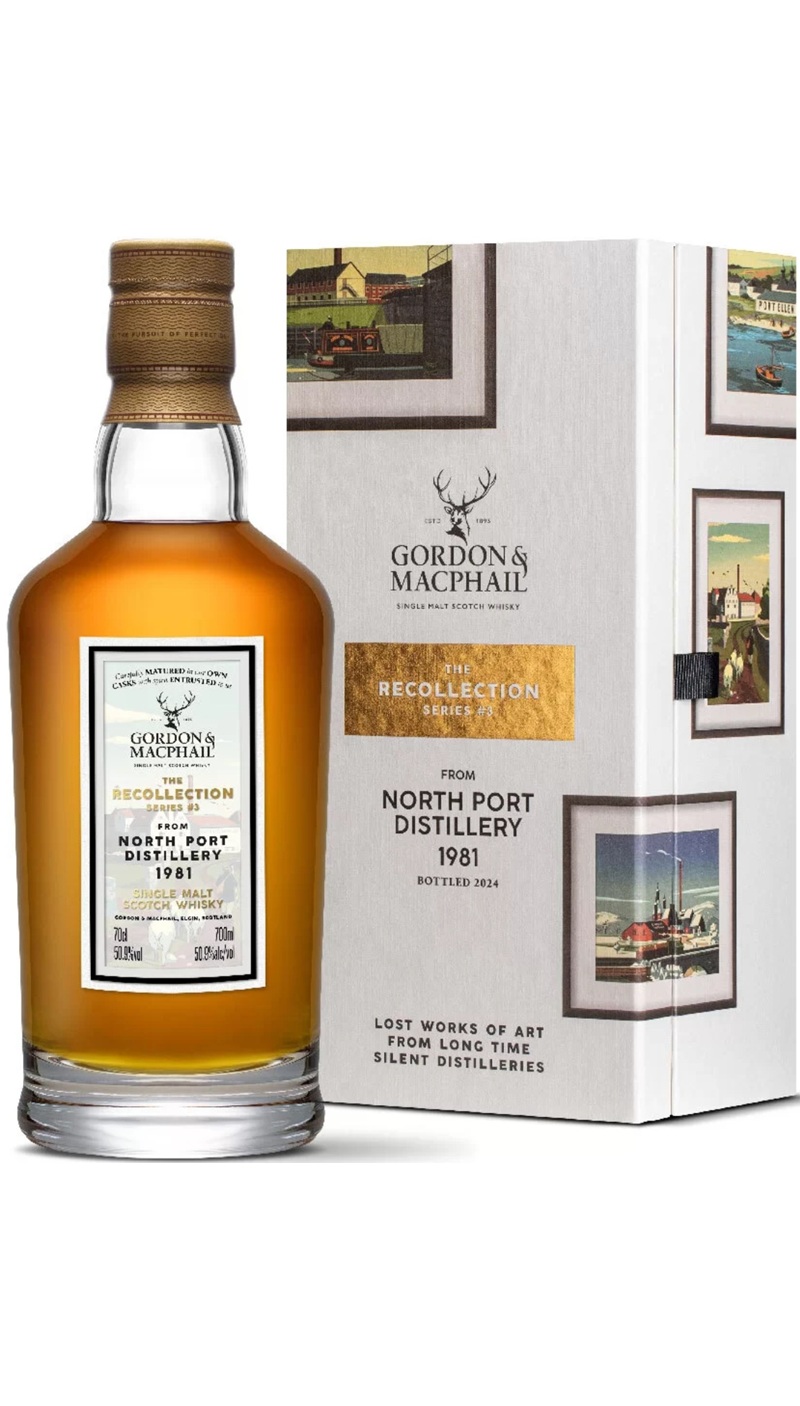
This Gordon & MacPhail Recollection Series 3 bottling of North Port (aka Brechin) is a 1981 vintage, bottled at 50.9% after maturing 42 years in Refill American Hogshead.
Producer Description
"Single malts featuring the distillery’s original name, Brechin Distillery, are vanishingly rare. Founded in 1820 near Scotland’s east coast by three brothers, David, John and Alexander Guthrie, the distillery stood half a mile from the River Esk. It remained in family ownership for over a century, renamed North Port Distillery, before new owners closed its doors in 1928. It reopened after the Second World War only to fall silent again in 1983, with the site demolished in 1994. Whisky writer, Michael Jackson, described its spirit as ‘dry and fruity’ and this whisky, matured in a Gordon & MacPhail cask, is a forgotten masterpiece that revives the spirit of a bygone age."

$7199.99
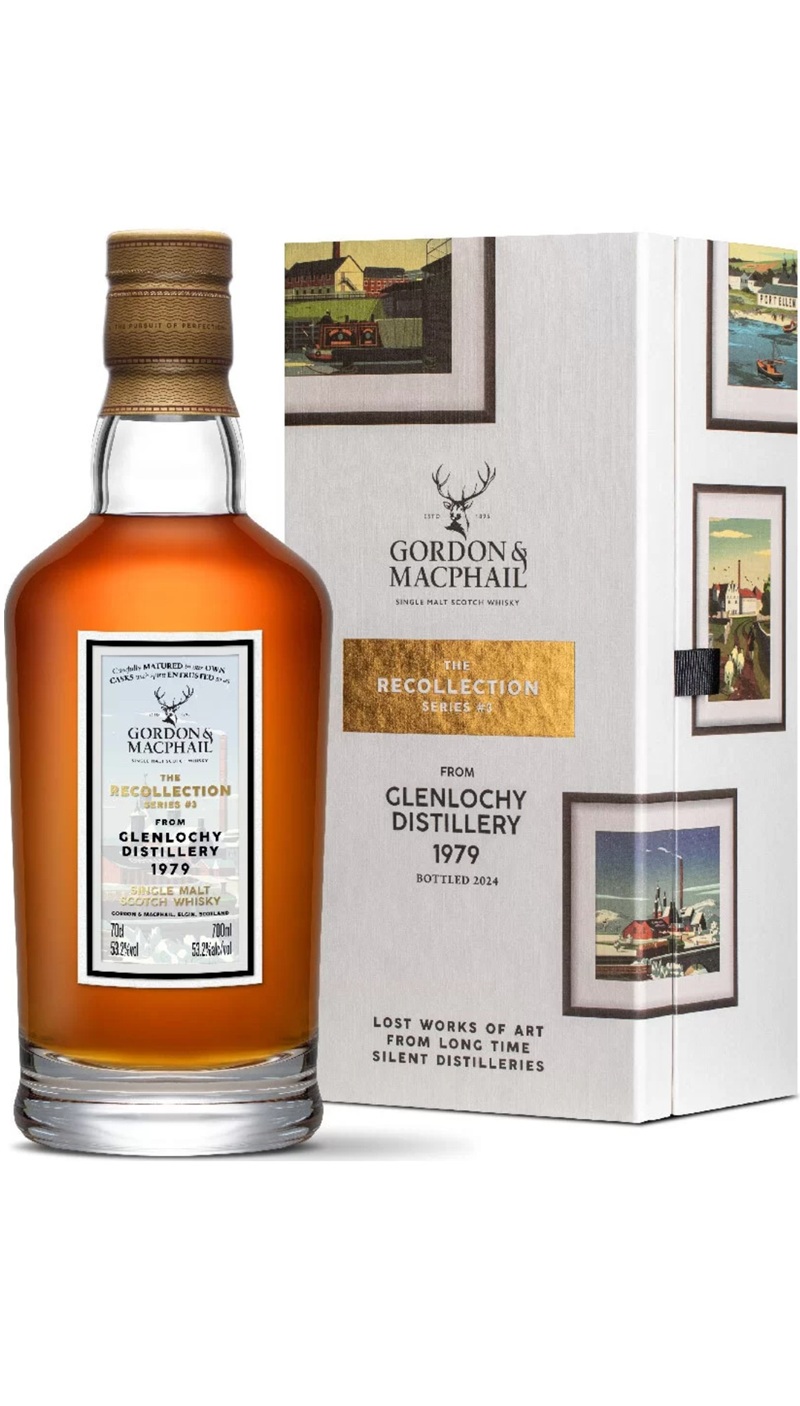
This 1979 Glenlochy was bottled as part of the Gordon & MacPhail Recollection Series 3 at 53.2% after 44 years in a Refill American Oak Hogshead.
Producer Description
"Founded in 1898, on the banks of the River Nevis shortly after the completion of the West Highland Railway, Glenlochy was well positioned to transport its whisky to Glasgow. The bulk of spirit from its stills was destined for blends so any release featuring the distillery name is extremely rare. Glenlochy was eventually closed in 1983 and sold for redevelopment as a hotel in 1991. All of the original buildings have since been demolished apart from the kiln building, but within this single malt, its spirit endures."
$17500
Available by Request!
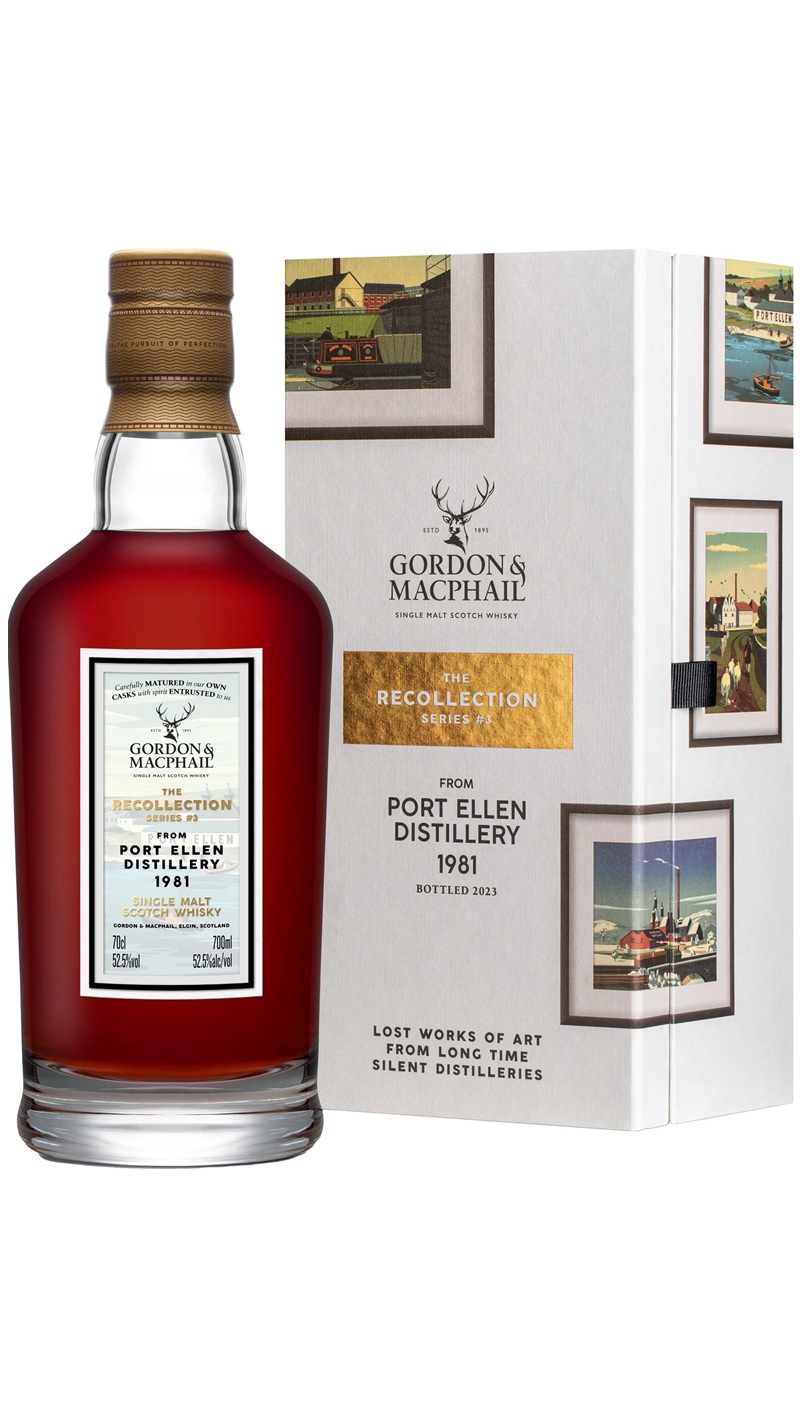
Only 60 bottles of this 1981 Port Ellen have been released worldwide. Distilled in 1981, the whisky was filled into a Refill Sherry Hogshead, and has been bottled after 42 years at a cask strength of 52.5%. 93pts Whisky Fun
$3099.99
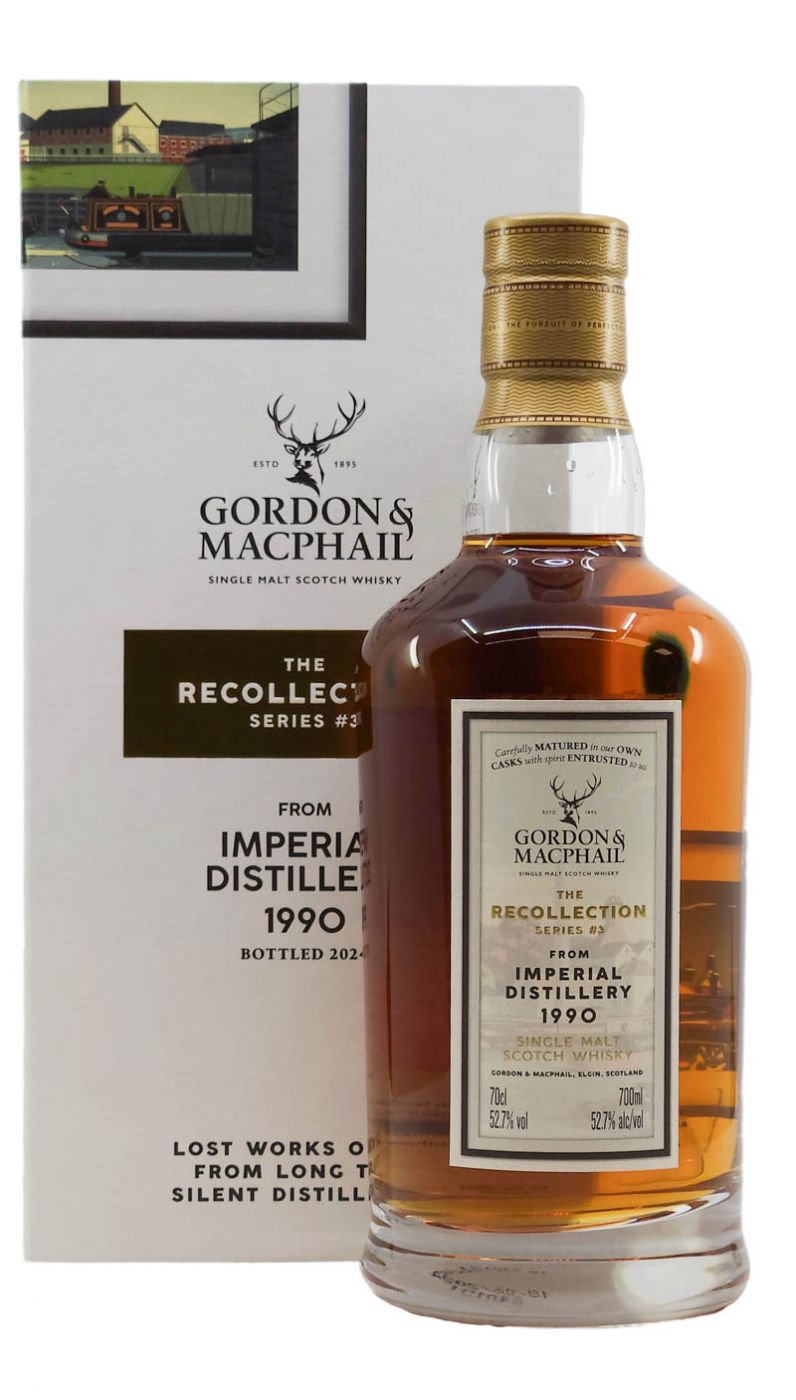
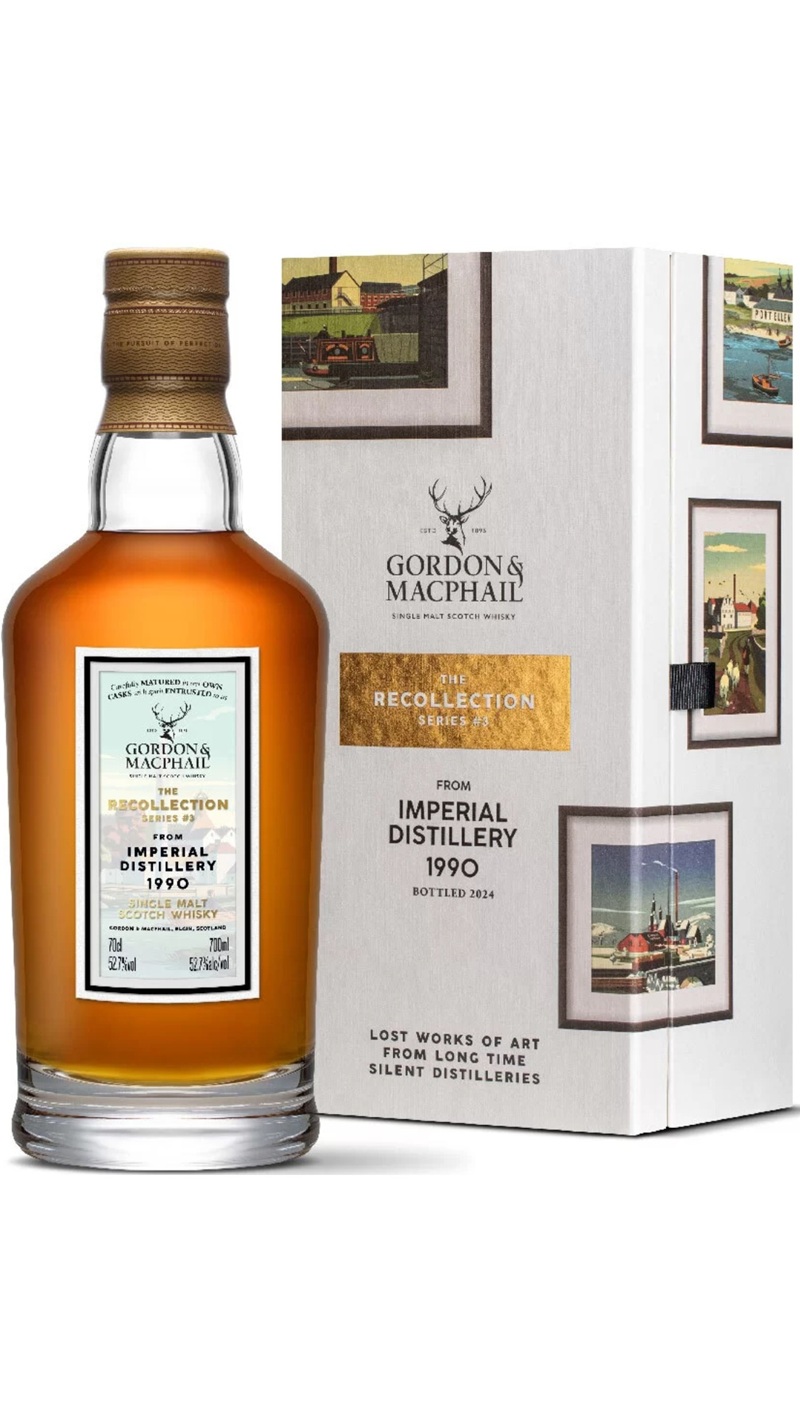
Bottled as part of Gordon & MacPhail's Recollection Series 3, this 1990 vintage Imperial was bottled after 33 years in a Refill American Hogshead at 57.2%. 92pts Whisky Fun
Producer Description
"Built by Thomas MacKenzie in 1897 – the year of Queen Victoria’s Diamond Jubilee – Imperial Distillery was constructed in the heart of Speyside on a grand scale, the maltings capped by a cast iron crown. Mothballed in 1899, it reopened in 1919, fell silent for another 30 years then opened again, supplying spirit for blended whisky, only to close for the last time in 1998. In 2013, the buildings were demolished and Dalmunach Distillery now stands on the site. Single malt whiskies featuring the Imperial Distillery name are the epitome of rare. Their reputation continues to grow and this forgotten masterpiece was matured in a Gordon & MacPhail cask for more than three decades."