
Newsletter
Sign up for our newsletter for information on our latest products and promotions.
Sign up for our newsletter for information on our latest products and promotions.

Please confirm that you are of legal age
to purchase alcohol in your region.
You currently have an active checkout session
open already, would you like to clear it?


1257 Kensington Road NW
1 (403) 283-8000 / atyourservice@kensingtonwinemarket.com
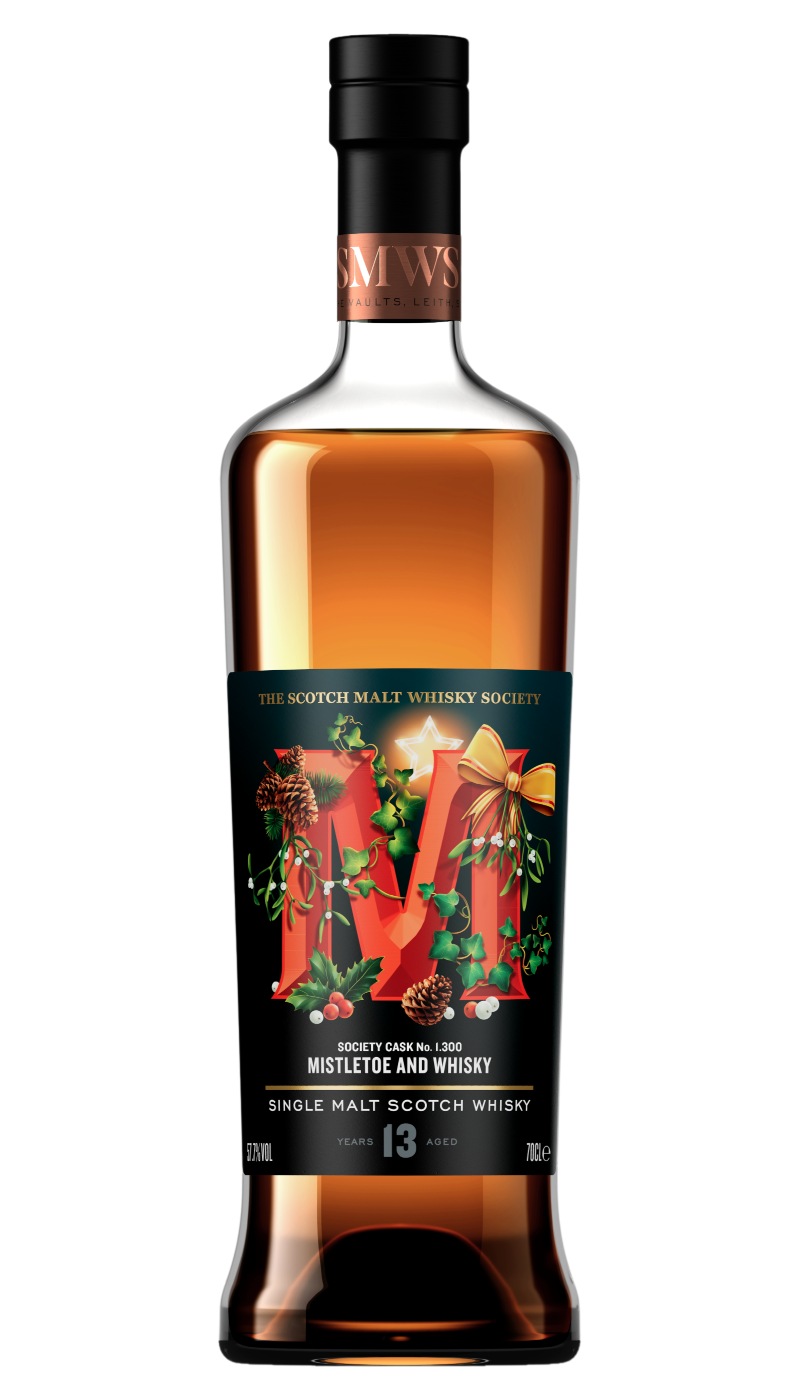
This whisky was featured on Day 1 of our 2025 KWM Still Not An Advent Calendar Tasting Series! You can read more about the whisky here.
SOLD OUT! :(
MISTLETOE AND WHISKY
This 13 year old Speysider spent 10 years in an ex-bourbon barrel before being transferred to a 1st fill PX hogshead, and has an abv of 57.7%.
Flavour profile: Deep, rich & dried fruits
Distilled on: 25 January 2012
Outturn: 202 bottles
700 mlSMWS Tasting Panel's tasting note: "A hollowed orange stuffed with marmalade and dunked in dark chocolate greeted us on the nose, along with dates and plum jam. The palate began with a generous crunch of cracked black pepper, followed by a cup of earl grey tea and malt biscuits. Water gave even more life to the nose, with clove-adorned honey-baked ham, raisin purée, figs dipped in chocolate and candied rhubarb.
The palate was equally enlivened by introducing water, offering treacle scones drizzled with butterscotch, strawberry jam stirred with liquorice, and parma violet frosting served on a butterscotch taffy spoon. After 10 years in an ex-bourbon barrel, we transferred this to a 1st fill American oak Pedro Ximenez hogshead for the remainder of its maturation."
Evan’s Tasting Note
Nose: This is like smelling cloves and liquorice while drinking mulled wine in front of a fireplace loaded with wood that is just catching and still-burning embers underneath. The nose is full of figs, dark chocolate, and dense fruit cake.
Palate: More figs, dates, raisins, and fruitcake along with roasted hazelnuts and walnuts. Caramelized brown sugar, molasses, candied orange peel, mulling spices, nutmeg, plus an underlying salty note and just a touch of savoury steak sauce.
Finish: Long, sweet and nutty with lingering mulling spices and cloves.
Comment: Both sweeter on the palate and showing a slightly different spice profile than a typical Glenfarclas. This is a big, bold and rich dram that is sure to warm the cockles of any one’s heart.
The following was written by Andrew Ferguson for Celtic Life in 2018:
Like most of the Scottish distilleries to open in the 18th and 19th centuries, Glenfarclas was a farm before becoming a distillery. Whisky-making requires both barley and a good supply of clean water, so it is not surprising that most of Scotland’s distilleries are found in rolling barley fields at the foot of the country’s wild mountains.
The connection between whisky and agriculture is vital; barley was an important feed stock for cattle, but it is very hard for them to digest it in its raw form. However, when it is malted, milled and mashed (to remove the sugars for fermentation into beer), what results is a slightly sweet, protein-rich cattle food. What farmers discovered over time, though, was that whisky making was far more profitable than farming or cattle rearing.

Although owner Robert Hay took out a license to distill at Glenfarclas in 1836, no one knows exactly when his farm started producing whisky. As with many distilleries at that time, the founding date does not always indicate when the facilities first started producing whisky, but rather when they were caught distilling illicitly and forced to apply for a license. One clue to the distillery’s origins is a watercolour painting from 1791, which still hangs in the location today. In the painting, the farm has a smokestack, vessels that look a lot like wormtubs (for condensation), and barrels strewn all over the yard. It also sits clearly at the foot of Ben Rinnes, the tallest mountain in the area. Most tellingly the words “Glenfarclass Disty” are scrawled in the bottom right hand corner.
The story of Glenfarclas starts to get interesting in 1865, when the distillery was acquired by the Grant family following the death of Robert Hay, for the sum of £511.90. For the next 152 years, six generations of the Grant family have run and managed the distillery. Curiously, since the purchase, all five of the chairmen have been named either John or George. The current chairman is John L.S. Grant, and his son - and successor - is named George. This unbroken chain of Johns and Georges may have run its course though, as George has two daughters, and to the best of my knowledge neither is named John or George. Glenfarclas is a stubbornly independent firm, and not without reason.

They were early partners with Pattison Elder & Co., a firm run by a pair of “reckless” and flashy brothers from Leith. Pattison Elder & Co. was the whisky industry’s ‘Enron’ of their day, building an empire on promises, lies, cheap credit, and IOUs. When they spectacularly collapsed in 1898 they took most of the industry with them, including - very nearly - the Glenfarclas Distillery. The Grants barely held on to their distillery, and it would take 15 years of hard work to recover their position. Thus, a “Spirit of Independence” was born.
The second half of the 20th century saw the distillery transition from producing whisky for blends to focusing on single malts. Glenfarclas pioneered the concept of Cask Strength whisky in 1968, with the release of their 105˚ Cask Strength which is bottled at 60 per cent (105˚ British proof). The whisky is still available today, and is created by marrying casks until they hit the magic number of 60 per cent abv. Most distilleries lose 1 to 2.5 per cent of their maturing whisky to evaporation each year - what we call “the angels' share.” Glenfarclas loses less, only 0.5 per cent, owing to both a local microclimate and a focus on the use of larger Sherry Butts for maturation. The distillery also fills its barrels at a higher proof than their peers, as it is not reliant on trading casks for blends at a standardized strength. As the fourth Grant to own Glenfarclas, the late George S. Grant was allegedly fond of saying, “we are not in the business of maturing water.”

Glenfarclas has a depth of maturing whisky stocks which is the envy of the entire Scotch whisky industry. They have released single casks under their “Family Cask” range for every year up to, and including, 1952. The company’s business plan has always been to lay down as much whisky as they can, even when times are tight. Business will eventually pick up again, and if there is no stock then there won’t be anything to sell.
Glenfarclas has survived 22 recessions, the Great Depression, and the Pattison Whisky Crash. They will also likely survive the day when someone other than a John or George takes the helm as chairman.
The distillery is located just off the A95, about 5 minutes’ drive from the town of Aberlour, in Scotland’s stunning Speyside region. The facility offers tours daily, including a ‘Five Decades’ tour for £100, which includes the tasting of a whisky from every decade between 1960 and the 2000s. If you can’t make it to Glenfarclas you should be able to find their whisky. The 105˚ Cask Strength is excellent value at $84. Try it neat before you add any water to it, as it is rich, fruity and spicy, though not rough. The 15 Year, $90, is their benchmark sherried whisky and flagship single malt. If you really want to treat yourself, find a bottle of the 40 Year - at $1,100 it might seem dear, but it is lovely, layered, very fruity, and great value for its vintage.

As a Scotch Malt Whisky Society member, you will join over 40,000 other members around the world who, like our whiskies, are altogether unique. Only members can purchase SMWS whiskies (please note we are not a Scotch-of-the-Month club); you'll join a family of whisky adventurers who appreciate that their whisky discoveries taste better when shared.
SMWS Canada offers a wide variety of whiskies, and sometimes other spirits, every month. Our exclusive retail partners, including Kensington Wine Market, host tastings of our new releases every month, and members get advance notice and a discount on the ticket price.
Also available exclusively to members is Unfiltered, our award-winning online magazine that is guaranteed to provide you with fascinating insights into The Society and its events, and the world of single malt whisky.
Members also gain access to Members' Rooms in Edinburgh, Leith, London and elsewhere, and receive a discount at SMWS Partner Bars around the world.
A Club With Personality - Who Are We?
The Scotch Malt Whisky Society is a club unlike any other. Since we were formed in 1983, we've believed in doing things differently. We seek out whisky in its purest form, we prize flavour above everything else, and we're united and constant in our passion - to share the world's best whiskies, to bring them to life, and to make you proud to belong to the world's most colourful whisky club.
Our Beginnings
"The people who said it couldn't be done were so dull" - Pip Hills, Society Founder
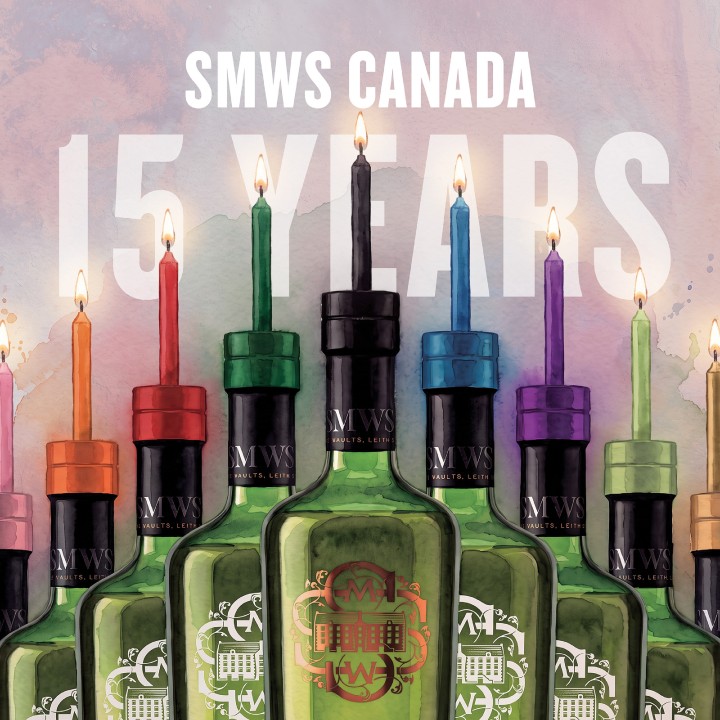 Our Society grew out of a few individuals' irrepressible spirit of discovery and adventure, which still drives us today. Inspired by the unique character of a cask of single malt whisky, purchased over 40 years ago from a Speyside distillery, this pioneering group of friends founded the Society in 1983 to buy more casks and share their discovery with like-minded adventurers.
The Canada Chapter of the Scotch Malt Whisky Society began its journey in October 2011. Kensington Wine Market is proud to have been its first retail partner, and continues to be the largest provider of SMWS bottles in Canada.
What We Do
Each of our whiskies must pass the uncompromising noses of our expert Tasting Panel – a secretive group of independent whisky connoisseurs from all walks of life – before being deemed worthy of an iconic Society green bottle. The exploration of flavour and sharing our discoveries is what we're all about. Our members enjoy exclusive access to our hand-picked whiskies from over 140 distilleries in Scotland and beyond. We bottle them at cask strength and offer a constant variety. How you drink them is entirely up to you.
You can find more information on the SMWS here
Browse Kensington Wine Market's current selection of SMWS bottles here