Newsletter
Sign up for our newsletter for information on our latest products and promotions.
Sign up for our newsletter for information on our latest products and promotions.

Please confirm that you are of legal age
to purchase alcohol in your region.
You currently have an active checkout session
open already, would you like to clear it?


1257 Kensington Road NW
1 (403) 283-8000 / atyourservice@kensingtonwinemarket.com

$95.99
We're creeping up on the bicentenary of the Fettercairn distillery. 2024 will mark the 200 year anniversary of Alexander Ramsay founding this Eastern Highland distillery that objectively offers up one of the most interesting and unique flavour profiles in Scotch Whisky. In fact, Angus McRaild (on behalf of Whiskyfun) a couple years back wrote "...cries out ‘Fettercairn’ with these notes of mud, cheese rind, steel wool, mechanical oils, farmyard and root vegetables. It doesn’t sound pleasant I know, but there’s plenty of charm to admire here." Don't even pretend you're not intrigued. Ex-Bourbon. 40%
700 mlProducer Tasting Note
Colour: Sunlight and amber honey
Taste: Vanilla and pear, with soft spices
Finish: Refreshing nectarine and tropical fruit, with subtle roasted coffee, clove, and ginger. A memorable finish of sultanas and black toffee
Did you know that Scotland’s national animal is a unicorn? You might have been tempted to guess it was a noble stag, but you’d have to guess again. In Celtic mythology, the unicorn symbolizes power, purity, and innocence. It first appeared on the Royal Coat of Arms of William I (a.k.a. the Lion) in the 12th century and was first used as a symbol for Scotland during the reign of King Robert III (1390-1406). Over the centuries it became an increasingly common feature in Scottish heraldry, and by the mid-1500s unicorns had become a key component of the Scottish Coat of Arms.

Today it is the country’s national animal, and some Scots even mark National Unicorn Day every April 9. But why all this talk of unicorns? Because the unicorn is also the emblem of the Fettercairn Distillery - adopted for the facility by its founder, Sir Alexander Ramsay. The unicorn is the dominant symbol in the Clan Ramsay crest.
Fettercairn Distillery was founded in 1824 on the outskirts of a village by the same name where the foothills of the Cairngorm Mountains meet the barley fields of Scotland’s east coast. In 1830, Sir John Gladstone, father of the future British Prime Minister William Gladstone, purchased the distillery and the estate it sat on. While the family would own the distillery for nearly 100 years, it would mostly be run by tenants.
Although William Gladstone never got his hands dirty with respect to distillation, during his time as Chancellor of the Exchequer (1859-1866) he did pass the Spirits Act of 1860. This law cemented and extended the rights of merchants to blend and store both malt and grain whiskies under bond. These rights were further extended in 1863, allowing spirits dealers to retail their whiskies to the public in small quantities. Gladstone’s legislation effectively gave birth to the Blended Scotch Whisky trade. In time, this paved the way for the likes of Andrew Usher & Co., John Walker & Sons, Chivas Brothers, and dozens of other world-famous brands.
Fettercairn is a rather traditional distillery in most respects, with one key difference: both of the spirit stills (used for the second distillation) have a ring of pipe near the top which drizzle cool water down the neck of the stills. The effect cools the copper neck - both internally and externally - increasing reflux and producing a lighter spirit than they would have otherwise been expected to.

As with most Scottish single malts, Fettercairn’s whisky has primarily been produced as a component for blends. It features most prominently in the blended scotch brands of Whyte & MacKay, who acquired the distillery in 1973. The first official bottlings of single malt from the distillery began popping up in the 1970s, but it has only been consistently available as a single malt since the mid-1990s. Fettercairn was also an early proponent of whisky tourism, opening a visitor center in 1989, well before many other better-known distilleries.
In 2009, with the tide rising for single malt, an increasing focus was put on marketing the distillery as a single malt brand. The range was revamped again in 2018, in the lead-up to the distillery’s 200th anniversary, which they are celebrating this year.
Fettercairn’s spirit is generally fruity and nutty in aroma and taste, often showing with a lighter floral edge thanks to the cooling rings on the spirit stills. The whisky is primarily matured in American oak, though its owners do love a Port Cask Finish, or Matusalem Sherry Finesse. Official Fettercairn bottlings are generally available in most good whisky shops around the world, and with a core range of expressions from 12-50 years of age.
To mark the anniversary, Fettercairn has released a set of six vintage whiskies aged 3-60 years of age (which cleverly add up to 200 total). These sets are almost as rare as unicorns, with just 10 being made available for sale worldwide. Each set is housed in a unique cabinet made by a master craftsman, and - as they say - if you have to ask the price, then you probably can’t afford it. But you can see one by visiting the distillery, which is located roughly halfway between Dundee and Aberdeen. Fettercairn offers tours and tastings year-round, though you are always best to book in advance.

$409.99
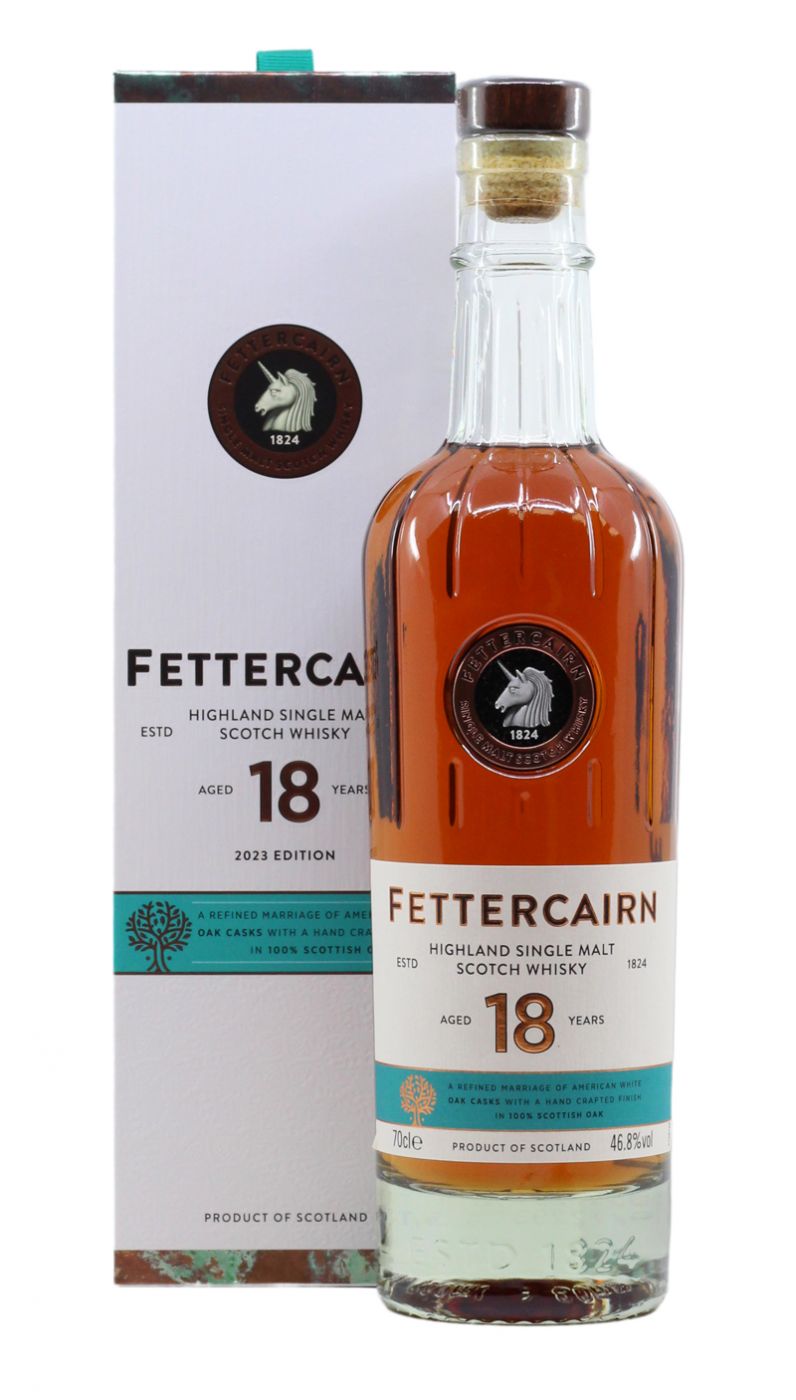
The 18 years old Fettercairn has been bottled at 46.8% after maturing in American oak then finished in Scottish oak casks.
Producer Description
"Our 18 Year Old annual limited release, has been created using a handpicked selection of first fill and refill ex-bourbon American white oak casks and then finished in responsibly sourced 100% Scottish oak casks. As our new make spirit evolves in this unique cask duo, it creates balance and brings a beautiful richness and depth to our tropical distillery house character."


$156.99
The 2022 Edition of Fettercairn 16 Year has been bottled at 46.4% from both sherry matured and sherry finished single malt.
Producer Description
"Each release of Fettercairn 16 year old single malt will showcase a maturation journey that enhances the tropical distillery character derived from the copper cooling ring distillation process. The 2022 release brings together spirit from Sherry matured and Sherry finished casks. A hand-picked trilogy of 1st and 2nd fill Oloroso, Pedro Ximenez and ex-Bourbon casks finely balanced to accentuate the beauty of the tropical house style."

$144.99
This Old Malt Cask Bottling of Fettercairn was englassed at 50%, as is tradition, after 14 years in a Refill Hogshead cask.
$139.99
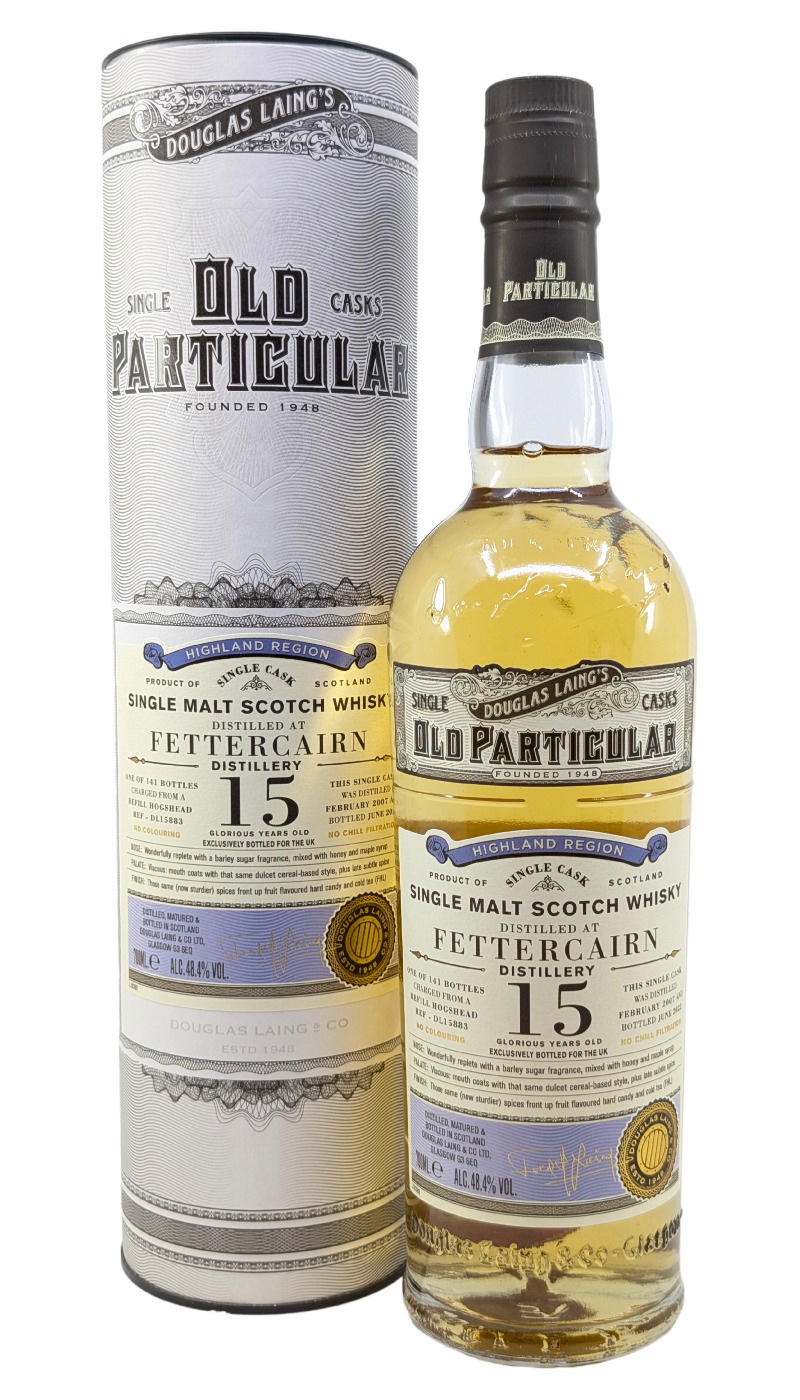
This 2007 vintage Fettercairn was bottled at 48.4% after 15 years in a Refill Hogshead.