
Newsletter
Sign up for our newsletter for information on our latest products and promotions.
Sign up for our newsletter for information on our latest products and promotions.

Please confirm that you are of legal age
to purchase alcohol in your region.
You currently have an active checkout session
open already, would you like to clear it?


1257 Kensington Road NW
1 (403) 283-8000 / atyourservice@kensingtonwinemarket.com
$194.99
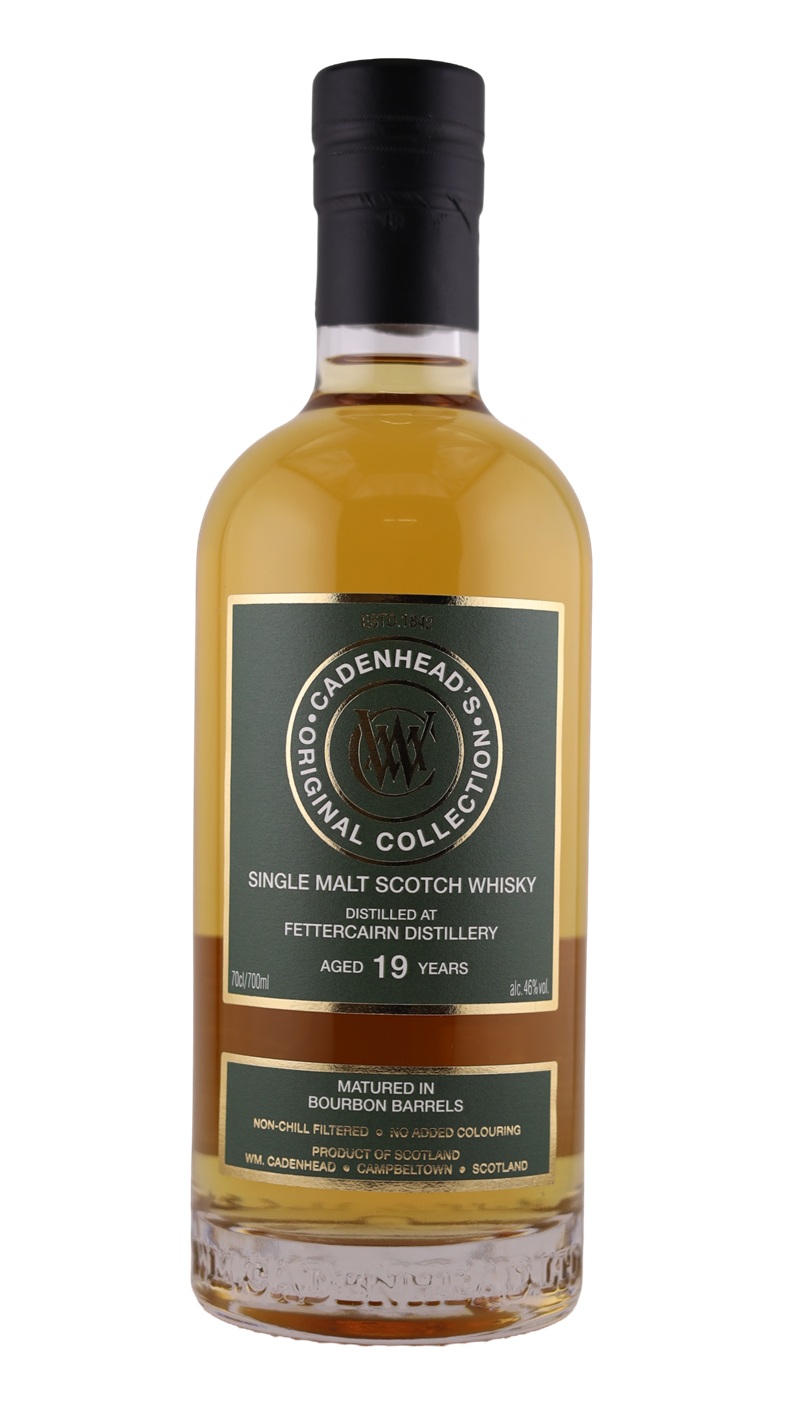
This 2006 vintage Fettercairn was bottled at 46% from an ex-Bourbon Cask at 19 years.
700 ml Low StockProducer Tasting Note
Nose: Fruit salad sweets, quince, toffee bonbon.
Flavour: Devon custard, toffee popcorn, nectarines.
Finish: Gorse, granny smith apples, cloves.
Did you know that Scotland’s national animal is a unicorn? You might have been tempted to guess it was a noble stag, but you’d have to guess again. In Celtic mythology, the unicorn symbolizes power, purity, and innocence. It first appeared on the Royal Coat of Arms of William I (a.k.a. the Lion) in the 12th century and was first used as a symbol for Scotland during the reign of King Robert III (1390-1406). Over the centuries it became an increasingly common feature in Scottish heraldry, and by the mid-1500s unicorns had become a key component of the Scottish Coat of Arms.

Today it is the country’s national animal, and some Scots even mark National Unicorn Day every April 9. But why all this talk of unicorns? Because the unicorn is also the emblem of the Fettercairn Distillery - adopted for the facility by its founder, Sir Alexander Ramsay. The unicorn is the dominant symbol in the Clan Ramsay crest.
Fettercairn Distillery was founded in 1824 on the outskirts of a village by the same name where the foothills of the Cairngorm Mountains meet the barley fields of Scotland’s east coast. In 1830, Sir John Gladstone, father of the future British Prime Minister William Gladstone, purchased the distillery and the estate it sat on. While the family would own the distillery for nearly 100 years, it would mostly be run by tenants.
Although William Gladstone never got his hands dirty with respect to distillation, during his time as Chancellor of the Exchequer (1859-1866) he did pass the Spirits Act of 1860. This law cemented and extended the rights of merchants to blend and store both malt and grain whiskies under bond. These rights were further extended in 1863, allowing spirits dealers to retail their whiskies to the public in small quantities. Gladstone’s legislation effectively gave birth to the Blended Scotch Whisky trade. In time, this paved the way for the likes of Andrew Usher & Co., John Walker & Sons, Chivas Brothers, and dozens of other world-famous brands.
Fettercairn is a rather traditional distillery in most respects, with one key difference: both of the spirit stills (used for the second distillation) have a ring of pipe near the top which drizzle cool water down the neck of the stills. The effect cools the copper neck - both internally and externally - increasing reflux and producing a lighter spirit than they would have otherwise been expected to.

As with most Scottish single malts, Fettercairn’s whisky has primarily been produced as a component for blends. It features most prominently in the blended scotch brands of Whyte & MacKay, who acquired the distillery in 1973. The first official bottlings of single malt from the distillery began popping up in the 1970s, but it has only been consistently available as a single malt since the mid-1990s. Fettercairn was also an early proponent of whisky tourism, opening a visitor center in 1989, well before many other better-known distilleries.
In 2009, with the tide rising for single malt, an increasing focus was put on marketing the distillery as a single malt brand. The range was revamped again in 2018, in the lead-up to the distillery’s 200th anniversary, which they are celebrating this year.
Fettercairn’s spirit is generally fruity and nutty in aroma and taste, often showing with a lighter floral edge thanks to the cooling rings on the spirit stills. The whisky is primarily matured in American oak, though its owners do love a Port Cask Finish, or Matusalem Sherry Finesse. Official Fettercairn bottlings are generally available in most good whisky shops around the world, and with a core range of expressions from 12-50 years of age.
To mark the anniversary, Fettercairn has released a set of six vintage whiskies aged 3-60 years of age (which cleverly add up to 200 total). These sets are almost as rare as unicorns, with just 10 being made available for sale worldwide. Each set is housed in a unique cabinet made by a master craftsman, and - as they say - if you have to ask the price, then you probably can’t afford it. But you can see one by visiting the distillery, which is located roughly halfway between Dundee and Aberdeen. Fettercairn offers tours and tastings year-round, though you are always best to book in advance.
This text is from an article written by Andrew for Celtic Life Magazine in 2017.
As strange as it may sound, it is only in the last three to five decades that most distilleries have seen fit to bottle their own whiskies as single malts. Prior to that, the vast majority of whiskies distilled in Scotland were produced almost exclusively for blends. With few exceptions, most of the available single malts prior to the 1970s were bottled by independent bottlers like Gordon Macphail and WM Cadenhead. Distilleries like Glenfiddich, Macallan, Glenmorangie, Bowmore and Glenlivet began bottling their whiskies as single malts and exporting them globally, in the 1960s. Other distilleries would follow in the 1970s, 80s, and 90s. Some products - like John Dewar & Sons’ “The Last Great Malts” series - have only been launched in the last few years.

Independent bottlings are whiskies bottled by a third party and not the distillery which produced them. Not all distilleries actually bottle their whiskies as single malts and many that do, have limited ranges. Independent bottlings fill this niche in the market, generally releasing single casks and small batch single malts that can vary enormously from the distillery’s core offering. If you are a devoted single malt aficionado, chances are you’ve come across more than a few independent bottlings in your day. If you haven’t yet dipped your toes into the world of independent bottlings, then you may be missing out on some of the world’s finest whisky, and it is high time you took a look at what they have to offer.
The oldest - and one of the finest - of all the independents is WM Cadenhead’s. Established in 1842, Cadenhead’s, as they are affectionately known, is a stubbornly traditional firm, with an exceptional range of whiskies. Along with Gordon Macphail, Cadenhead’s is one of Scotland’s best independent bottlers, with a range of old whiskies that is envied by the rest of the industry. Until the last few years, Cadenhead whiskies were only available from their network of shops in the U.K. and Europe. The Small Batch line was created four years ago to satiate selected whisky specialists around the world, and to distribute the company’s aging overstock.

WM Cadenhead was acquired by J.A. Mitchell & Co. in 1972, the family-owned firm which also owns the Springbank and Glengyle distilleries. After acquiring Cadenhead’s, and its stocks of maturing whisky, Hedley Wright - J.A. Mitchell’s colourful chairman and owner - is said to have spent the next few decades wandering Scotland with his check book. Wright made frequent visits to “his friends” at various distilleries across Scotland, purchasing casks as he went. Hedley kept track of his acquisitions on a series of ledgers, releasing casks bit by bit to the team at Cadenhead’s for bottling. To this day, the firm doesn’t even know the full extent of the casks they are sitting on. However, so long as Hedley keeps the flow of rare and old whiskies coming, Cadenhead’s will continue to be one of Scotland’s most interesting independent bottlers.

Today, Cadenhead’s is headquartered in the scenic coastal town of Campbeltown on the Kintyre Peninsula, within walking distance from its sister businesses, the Springbank and Glengyle (Kilkerran) distilleries. The Cadenhead’s Shop and Whisky Tasting Room serves as a visitor center and retailer for the three brands. They offer daily tours and tastings Monday to Saturday. While Springbank Distillery may be the main draw, the Cadenhead Warehouse tour is not to be missed. Mark and or Cameron will take you into the bowels of a dark, dingy old dunnage warehouse to sample some stunning whiskies, right out of the cask.
 Campbeltown is a bit of a trek, 4 hours by car from Glasgow, near the end of the Kintyre Peninsula. The town is charming, with much to see in the surrounding area, justifying at least a two-day visit. The world-famous Machrihanish Dunes Golf Course is just ten minutes away. In my opinion, Campbeltown is best seen in conjunction with the islands and Arran, Islay (and Jura) over a week-long tour. Caledonian Macbrayne, Scotland’s west coast ferry service, has a special pass for just such a route, called a Hop Scotch. But if Campbeltown is just too far to go, keep your eye open for one of the many other Cadenhead shops in Edinburgh, London, and across Europe. In Canada, Cadenhead Small Batch whiskies can be purchased from Kensington Wine Market in Calgary.
Cadenhead is celebrating its 175th Anniversary in 2017, so let’s raise a glass for their continued good spirits!
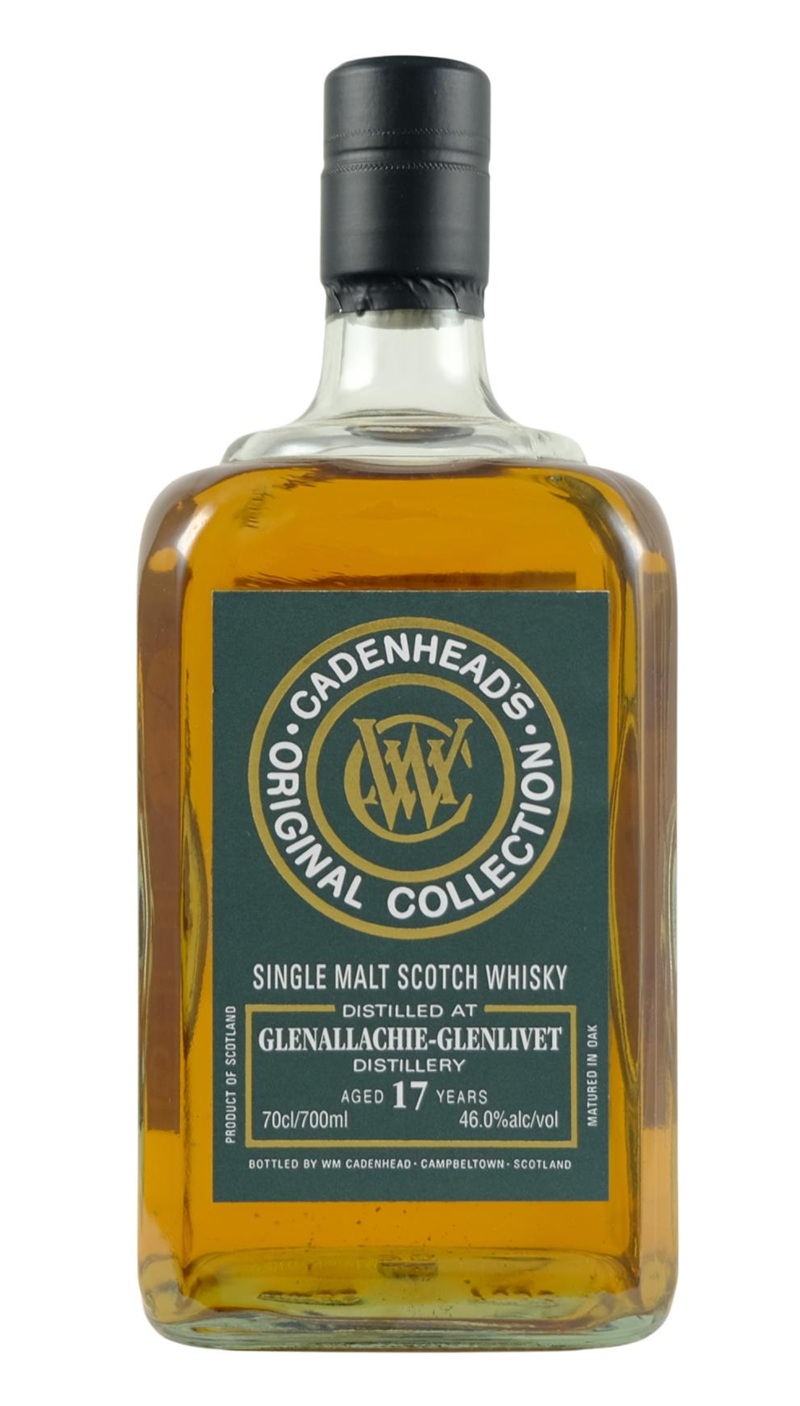
$141.99

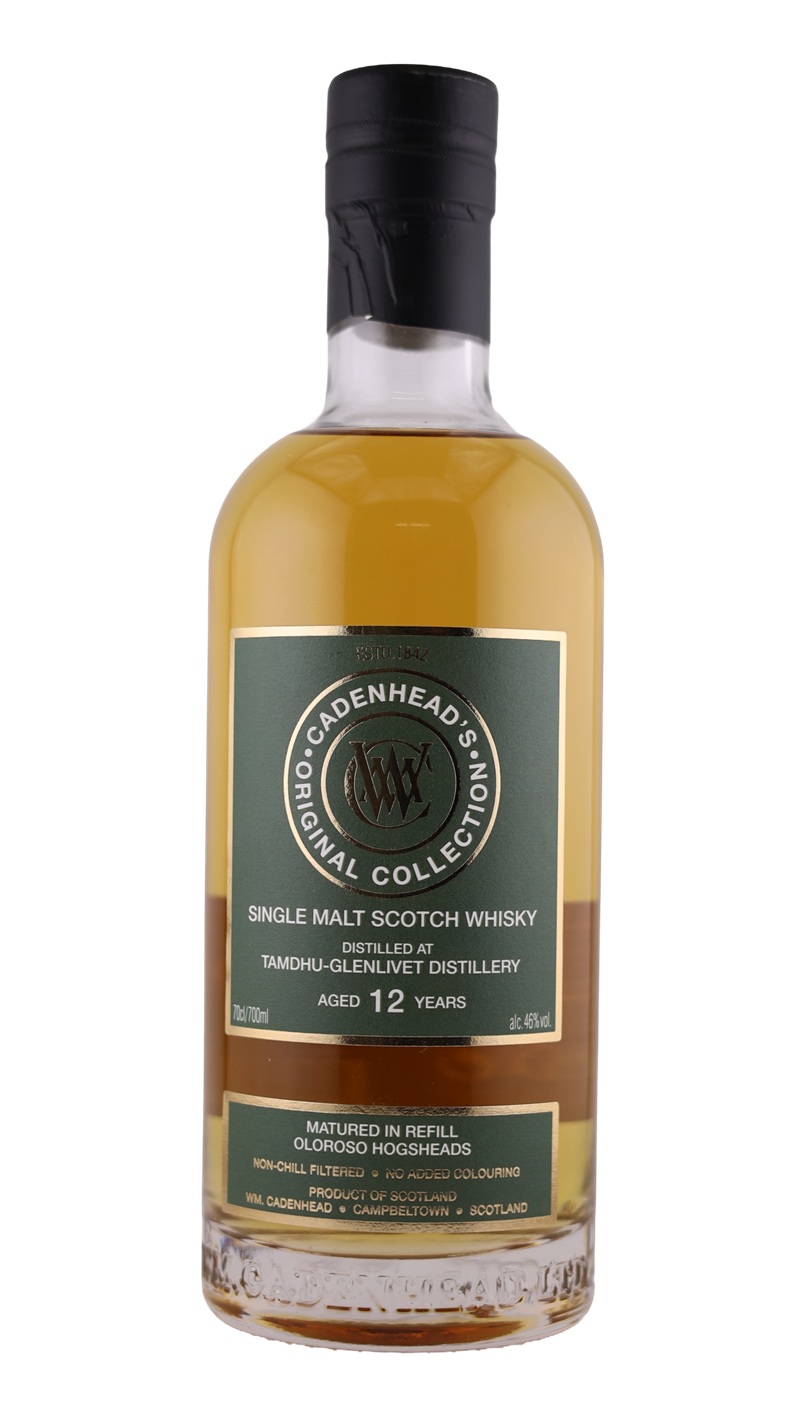
$114.99
46% - 2013 - Refill Oloroso Hogshead Casks
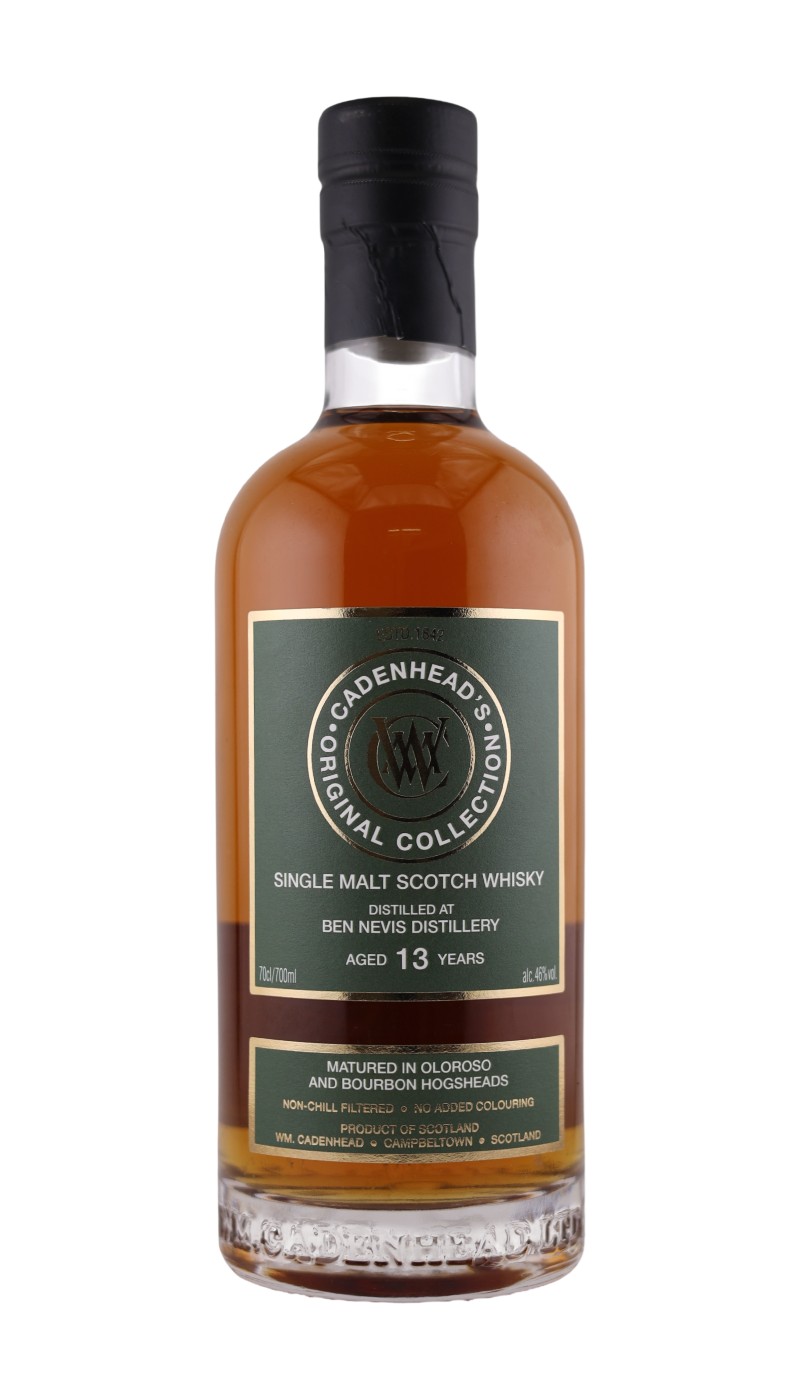
$124.99
Distilled in 2012 and bottled at 13 years of age, this small batch Ben Nevis was matured in a combination of ex-Oloroso Hogsheads and ex-Bourbon Hogsheads. The result has been bottled under the Cadenhead Original line at 46% ABV.