Newsletter
Sign up for our newsletter for information on our latest products and promotions.
Sign up for our newsletter for information on our latest products and promotions.

Please confirm that you are of legal age
to purchase alcohol in your region.
You currently have an active checkout session
open already, would you like to clear it?


1257 Kensington Road NW
1 (403) 283-8000 / atyourservice@kensingtonwinemarket.com
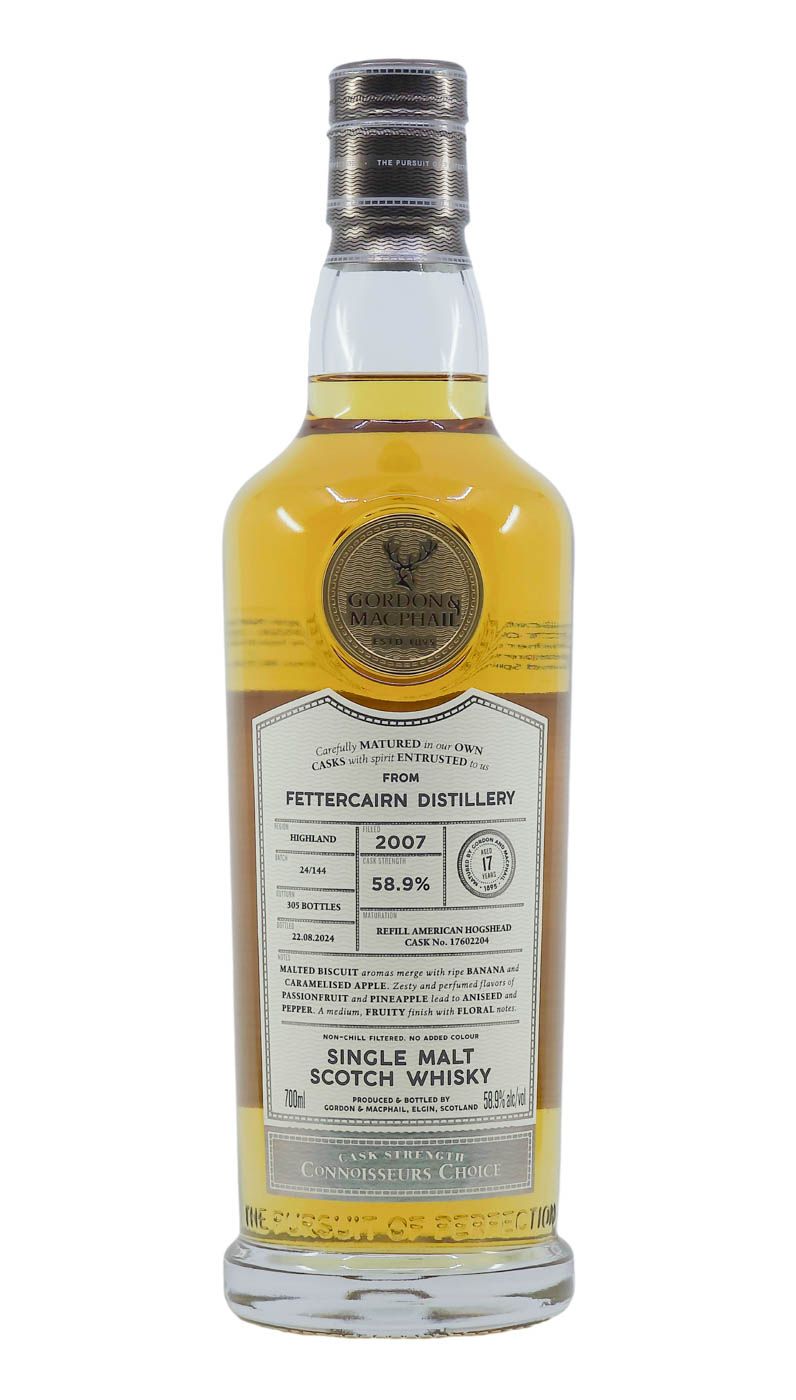
$211.99
58.9% - Refill American Hogshead
700 mlDid you know that Scotland’s national animal is a unicorn? You might have been tempted to guess it was a noble stag, but you’d have to guess again. In Celtic mythology, the unicorn symbolizes power, purity, and innocence. It first appeared on the Royal Coat of Arms of William I (a.k.a. the Lion) in the 12th century and was first used as a symbol for Scotland during the reign of King Robert III (1390-1406). Over the centuries it became an increasingly common feature in Scottish heraldry, and by the mid-1500s unicorns had become a key component of the Scottish Coat of Arms.

Today it is the country’s national animal, and some Scots even mark National Unicorn Day every April 9. But why all this talk of unicorns? Because the unicorn is also the emblem of the Fettercairn Distillery - adopted for the facility by its founder, Sir Alexander Ramsay. The unicorn is the dominant symbol in the Clan Ramsay crest.
Fettercairn Distillery was founded in 1824 on the outskirts of a village by the same name where the foothills of the Cairngorm Mountains meet the barley fields of Scotland’s east coast. In 1830, Sir John Gladstone, father of the future British Prime Minister William Gladstone, purchased the distillery and the estate it sat on. While the family would own the distillery for nearly 100 years, it would mostly be run by tenants.
Although William Gladstone never got his hands dirty with respect to distillation, during his time as Chancellor of the Exchequer (1859-1866) he did pass the Spirits Act of 1860. This law cemented and extended the rights of merchants to blend and store both malt and grain whiskies under bond. These rights were further extended in 1863, allowing spirits dealers to retail their whiskies to the public in small quantities. Gladstone’s legislation effectively gave birth to the Blended Scotch Whisky trade. In time, this paved the way for the likes of Andrew Usher & Co., John Walker & Sons, Chivas Brothers, and dozens of other world-famous brands.
Fettercairn is a rather traditional distillery in most respects, with one key difference: both of the spirit stills (used for the second distillation) have a ring of pipe near the top which drizzle cool water down the neck of the stills. The effect cools the copper neck - both internally and externally - increasing reflux and producing a lighter spirit than they would have otherwise been expected to.

As with most Scottish single malts, Fettercairn’s whisky has primarily been produced as a component for blends. It features most prominently in the blended scotch brands of Whyte & MacKay, who acquired the distillery in 1973. The first official bottlings of single malt from the distillery began popping up in the 1970s, but it has only been consistently available as a single malt since the mid-1990s. Fettercairn was also an early proponent of whisky tourism, opening a visitor center in 1989, well before many other better-known distilleries.
In 2009, with the tide rising for single malt, an increasing focus was put on marketing the distillery as a single malt brand. The range was revamped again in 2018, in the lead-up to the distillery’s 200th anniversary, which they are celebrating this year.
Fettercairn’s spirit is generally fruity and nutty in aroma and taste, often showing with a lighter floral edge thanks to the cooling rings on the spirit stills. The whisky is primarily matured in American oak, though its owners do love a Port Cask Finish, or Matusalem Sherry Finesse. Official Fettercairn bottlings are generally available in most good whisky shops around the world, and with a core range of expressions from 12-50 years of age.
To mark the anniversary, Fettercairn has released a set of six vintage whiskies aged 3-60 years of age (which cleverly add up to 200 total). These sets are almost as rare as unicorns, with just 10 being made available for sale worldwide. Each set is housed in a unique cabinet made by a master craftsman, and - as they say - if you have to ask the price, then you probably can’t afford it. But you can see one by visiting the distillery, which is located roughly halfway between Dundee and Aberdeen. Fettercairn offers tours and tastings year-round, though you are always best to book in advance.
Adapted from an article written for Celtic Life Magazine by Andrew Ferguson:
In 1895 James Gordon and John Alexander MacPhail opened a grocery business in the City of Elgin, the heart of Scotland’s Speyside whisky region. The business sold groceries, tea, coffee and wines from all over the world. 125 years later, Gordon & MacPhail still operates the grocery business in Elgin, but its real enterprise is as an Independent Bottler and Distiller of Scotch Whisky.

In the early years of the business Gordon and MacPhail brought in a young John Urquhart as apprentice. Urquhart had a knack for selecting and blending whiskies from local distilleries. He also began brokering casks and independently bottling single malt from famous distilleries like Glenlivet, Mortlach and Glen Grant. The practice of filling casks of new make whisky, rather than simply purchasing mature casks began at this time. This is something which sets Gordon MacPhail apart from almost all other independent bottlers to this day, and it gave them a leg up through leaner years. In 1915 John Urquhart was made senior partner, and though the firm would keep its name, from this point on it would remain privately owned by the Urquhart family.
In 1933 George Urquhart, aka “Mr. George”, joined his father in the business. He was heavily involved in the firm’s whisky business, travelling widely to showcase Gordon & MacPhail whiskies. G&M’s business thrived during and after World War II. Having had the foresight to lay down large numbers of casks in the 1930s and early 1940s, they were in a strong position to meet demand, especially in America. This was a difficult time for most of the industry with barley rationing dramatically reducing distilling.

In 1968, under George Urquhart’s leadership, Gordon & MacPhail launched the Connoisseurs Choice range. At a time when few distilleries were bottling their own whisky as single malt (rather producing it for use in Blended Scotch whiskies), Gordon & MacPhail began marketing single malts from distilleries across Scotland. The range is still being bottled today.
The third generation began entering the business with George’s son Ian Urquhart in 1967. He was joined by David Urquhart in 1972, as well as Michael Urquhart and Rosemary Rankin in 1981. The family firm continued to thrive even during the industry downturn of the 1980s and ear 90’s, emerging as the undisputed preeminent independent bottler of Scotch whisky. In the 2010s the torch was passed to the 4th generation, with at least five of John Urquhart’s descendants now involved in the business.

It had always been John Urquhart’s vision for the family to own a distillery of its own. The dream was finally realized in 1993 with the acquisition of the closed Benromach Distillery in the nearby town of Forres. The distillery was in rough shape, and it took nearly 5 years to get it up and running. HRH Prince Charles was on hand in 1998 for its official reopening. Never content to rest on their laurels, the firm announced plans in 2019 to open a brand-new distillery in the Cairngorms National Park. The Cairn Distillery is scheduled to open in 2022.
One of the most remarkable things about Gordon & MacPhail is the vision it had to mature whiskies to great ages. Few other whisky firms, whether distilleries or independent bottlers, have ever had the foresight to mature casks for more than 30 or 40 years. In 2010 G&M bottled the Generations Mortlach 70 Years Old, which was the oldest whisky ever bottled at the time. They followed up on that milestone by bottling 70-year-old Glenlivet in both 2011 and 2012. And then in 2015 they once again they raised the bar by bottling the Generations Mortlach 75 Year. Of the 10 oldest whiskies ever bottled, all but 2 have been bottled by G&M.

It is almost certain that Gordon MacPhail will one day bottle the first ever one-hundred-year-old whisky, but that may still be a couple of decades away. Their oldest maturing stocks are from the late 1930s and early 1940s. A number of these casks, 15 First Fill Sherry Butts to be precise, were filled for Gordon & MacPhail at the Glenlivet Distillery on February 3rd, 1940. Most of these casks have been bottled over the decades, but G&M dipped into another of these casks this year to bottle another whisky. The Generations Glenlivet 80 Year, once more the oldest bottle of Scotch Whisky ever bottled. It isn’t inexpensive, but I can vouch for it in one regard… it doesn’t disappoint!
Gordon & MacPhail whiskies can be found all over the world with whiskies ranging from under $100 to $100,000.00 or more. Their grocery shop in Elgin is the brand's spiritual home, with a section dedicated to Scotch Whisky that showcases more than 1000 bottles. Prior to Covid-19 the shop offered both tastings and in-store sampling. As does their nearby Benromach Distillery in Forres, one of the smallest and most traditional distilleries in the Speyside.


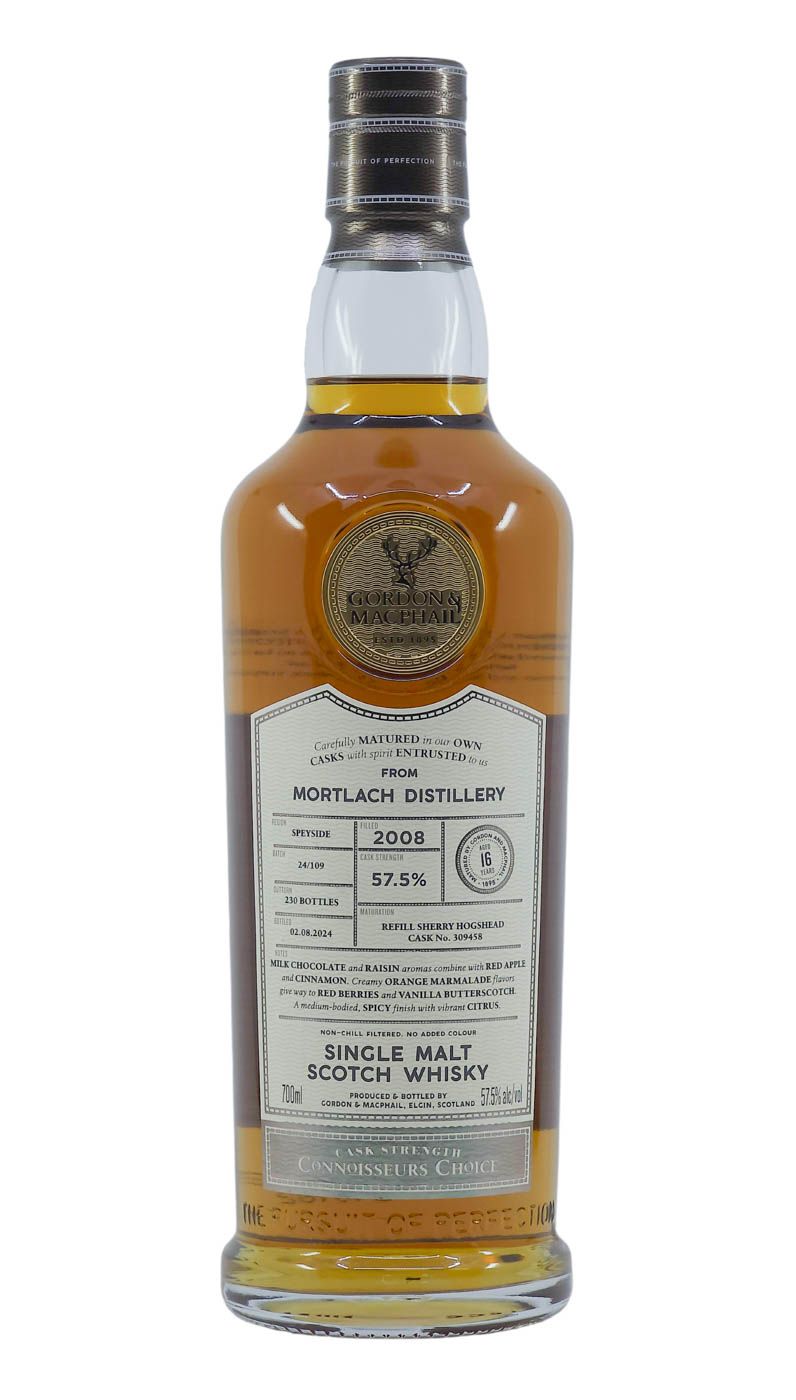
$224.99
57.5% - Refill Sherry Hogshead

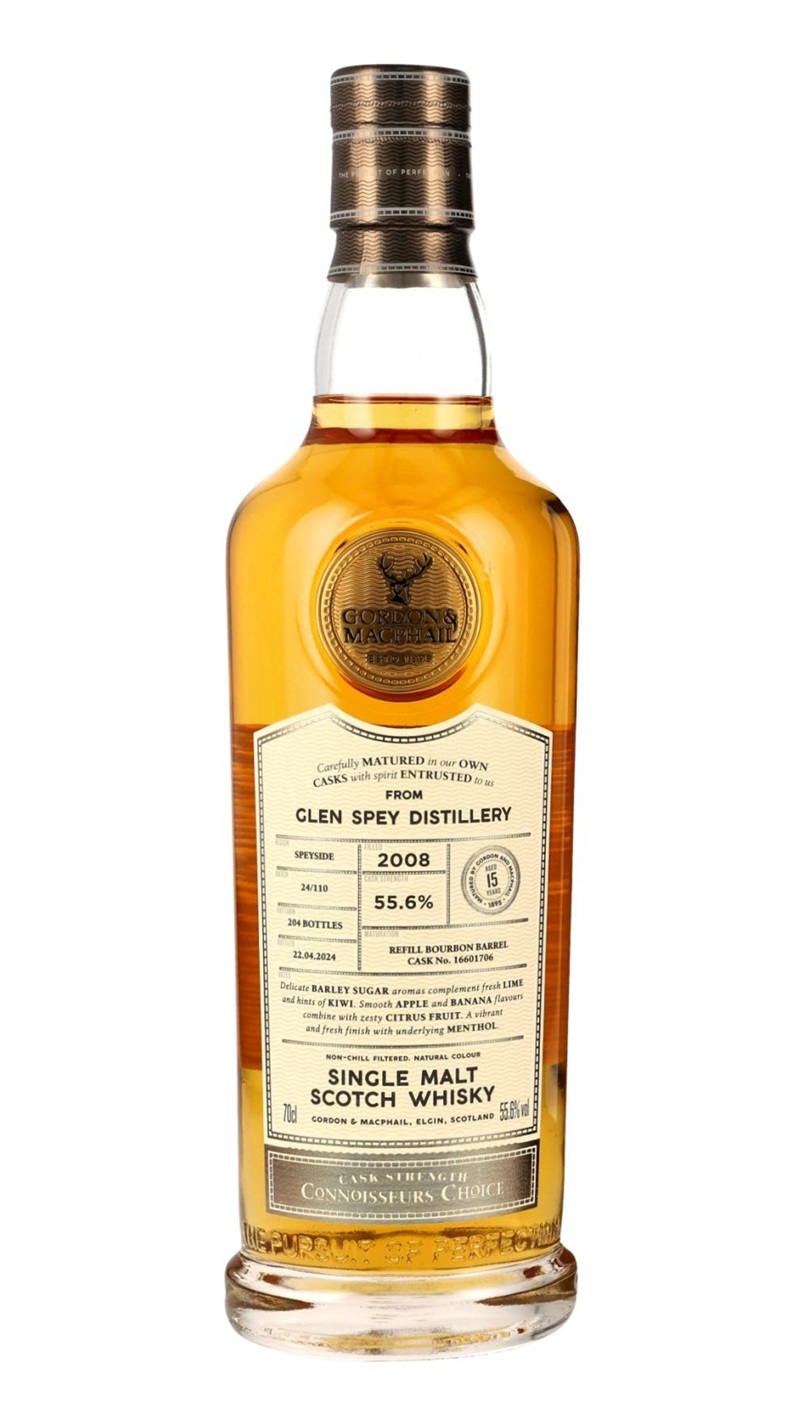
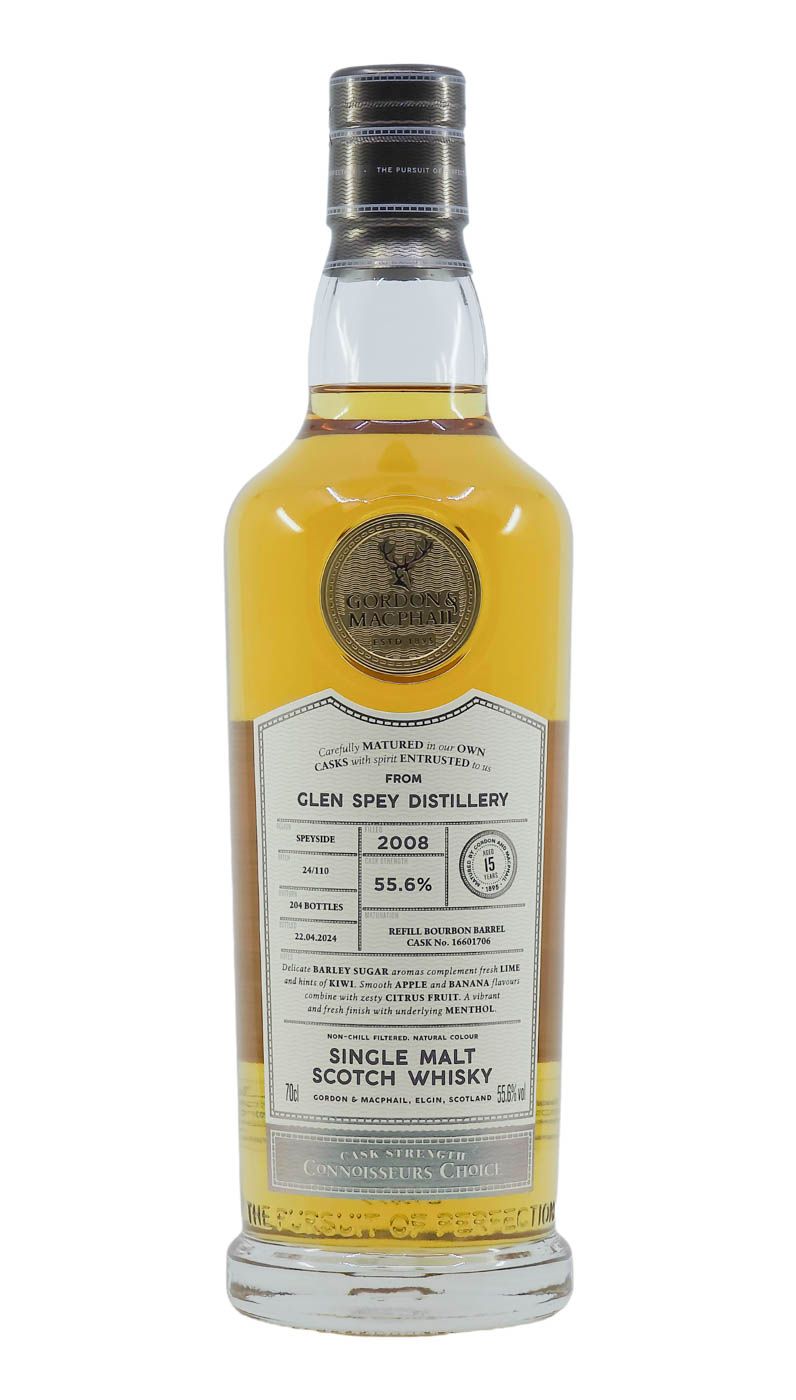
$204.99
55.6% - Refill Bourbon Barrel

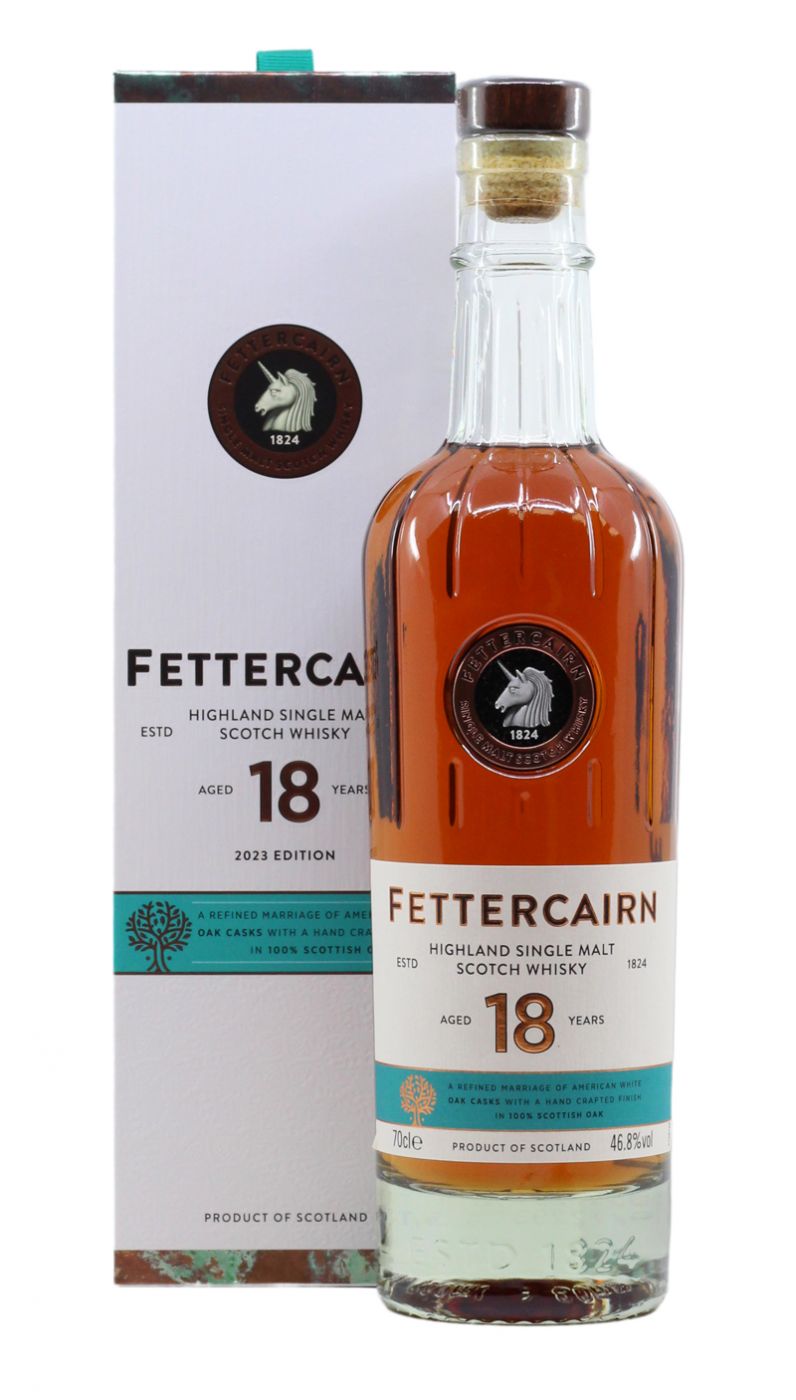
$409.99
The 18 years old Fettercairn has been bottled at 46.8% after maturing in American oak then finished in Scottish oak casks.
Producer Description
"Our 18 Year Old annual limited release, has been created using a handpicked selection of first fill and refill ex-bourbon American white oak casks and then finished in responsibly sourced 100% Scottish oak casks. As our new make spirit evolves in this unique cask duo, it creates balance and brings a beautiful richness and depth to our tropical distillery house character."

$156.99
The 2022 Edition of Fettercairn 16 Year has been bottled at 46.4% from both sherry matured and sherry finished single malt.
Producer Description
"Each release of Fettercairn 16 year old single malt will showcase a maturation journey that enhances the tropical distillery character derived from the copper cooling ring distillation process. The 2022 release brings together spirit from Sherry matured and Sherry finished casks. A hand-picked trilogy of 1st and 2nd fill Oloroso, Pedro Ximenez and ex-Bourbon casks finely balanced to accentuate the beauty of the tropical house style."