Newsletter
Sign up for our newsletter for information on our latest products and promotions.
Sign up for our newsletter for information on our latest products and promotions.

Please confirm that you are of legal age
to purchase alcohol in your region.
You currently have an active checkout session
open already, would you like to clear it?


1257 Kensington Road NW
1 (403) 283-8000 / atyourservice@kensingtonwinemarket.com
$249.99
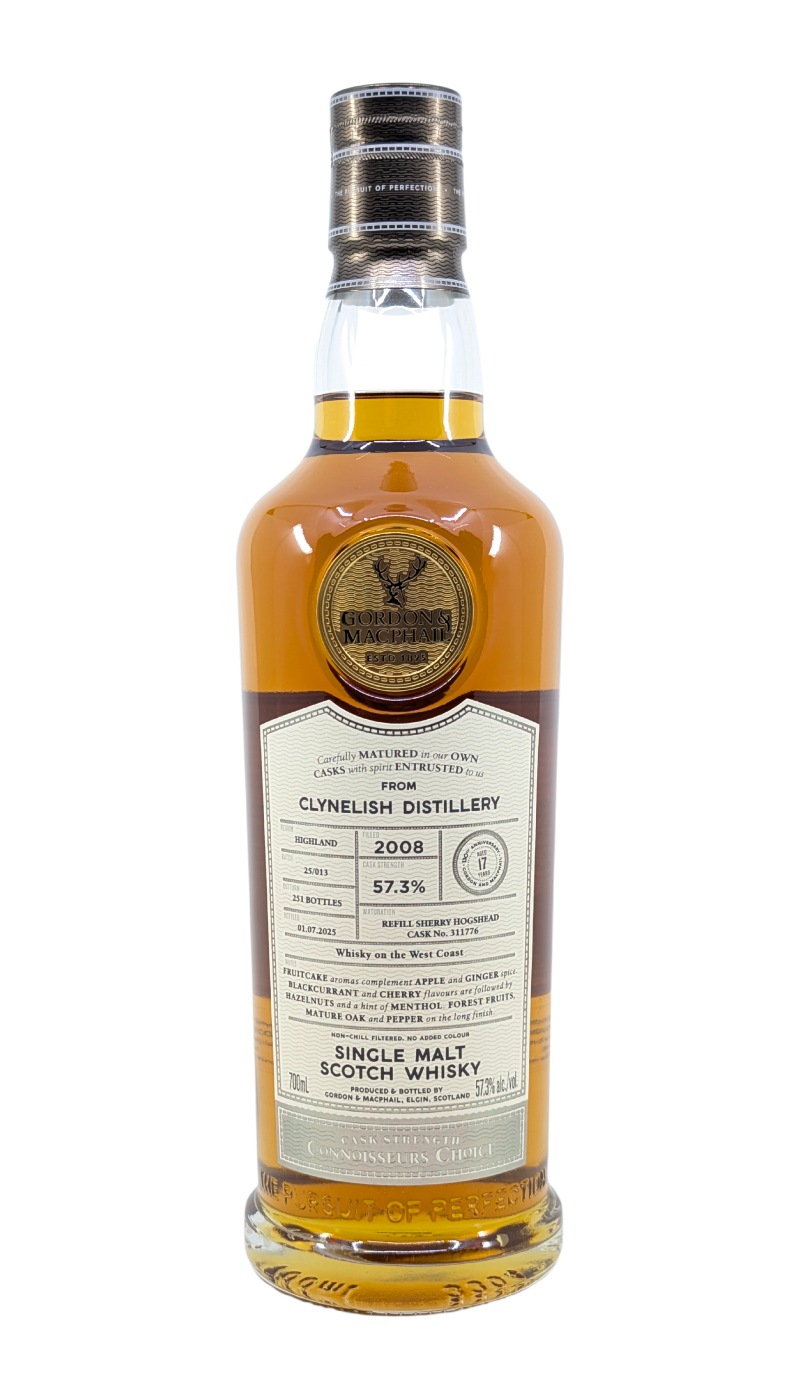
This 2008 vintage Clynelish was matured 17 years in a Refill Sherry Hogshead before bottling at 57.3%. The cask was selected by Matt at Whisky on the West Coast as a Western Canada exclusive bottling.
May Clynelish's waxiness never wane!
700 mlOUT OF STOCK
If you'd like us to try to order it, add it to your cart. We can't promise, but we'll do our best!
Producer Tasting Note
"Fruitcake aromas complement apple and ginger spice. Blackcurrant and cherry flavours are followed by hazelnut and a hint of menthol. Forest fruits, mature oak, and peper on the finish."

I have a personal connection to the Clynelish Distillery - one that goes well beyond my love of their whisky. This connection is a little bit at odds with my love for the whisky if I am being honest. The distillery was founded by the Marquis of Stafford, aka the 1st Duke of Sutherland, one of the worst actors in the dark period of Scottish history known as the Highland Clearances.
The Highland Clearances took place between 1750 and 1860 in the Highlands and Islands of Scotland. Tens of thousands of tenant farmers were cruelly and systematically evicted from their homes so that their farmland could be used for the more profitable grazing of sheep. Many were forced out of their homes at gunpoint and shepherded away to live in towns and villages while their meagre possessions went up in smoke. The displaced peoples were compelled to become fishermen, kelp harvesters, or hard labourors.
In later stages of the clearances, after it became apparent that the displaced peoples were struggling to support themselves and were suffering from famine, landlords turned to “assisted passages.” Tenants who were selected for “emigration” had little choice but to board ship and depart for places unknown. This is almost certainly how my mother’s ancestors found their way to Canada.

I am a member of the ancient Clan Gunn on my mother’s side. The Gunns claim Gunni as their founder, who was himself the descendant of Viking raiders. Gunni’s wife, Ragnhild, was the sister of the Earl of Orkney, who granted her estates in Caithness. The Gunns would play a prominent role in the far northeast of Scotland - the lands of Caithness and Sutherland - for the next 500 years. There is still a strong Gunn connection to these lands, but the Clearances did much to break the Clan system and Gaelic culture.
In just six years between 1814 and 1820, the 1st Duke of Sutherland alone evicted more than 3000 families - no fewer than 15,000 people from Caithness and Sutherland. One old woman was burned alive after refusing to leave her home.
The Cylnelish Distillery was founded by the Duke of Sutherland in 1819, ostensibly to give some of his newly unemployed tenants something to do. But I recall another version of this story, which implies that the distillery was opened, not out of commercial intent, but rather to drive the illicit distillers operating on his lands - the last holdouts to his Clearance - out of business. It seems this man’s cruelty knew no bounds, at least by modern standards. Whatever the truth is, the distillery has survived to this day, and has somewhat of a dedicated following for its whisky.

The original Clynelish Distillery was closed in 1968, after a new modern Clynelish distillery opened adjacent to it in 1967. The old distillery, renamed Brora after the town, was temporarily revived between 1969 and 1983 to supply demand for the booming Blended Scotch industry. In the years since, Brora has become a highly sought after and collectible whisky. This might have had something to do with its owner Diageo’s decision to reopen it after nearly 40 years.
The Brora (the original Clynelish) and Clynelish Distilleries are located side by side on the outskirts of the picturesque seaside town of Brora. The latter recently opened a state-of-the-art visitor center and, like its older sister distillery, has developed a bit of a cult following - in this case for a specific trait. Clynelish has a distinctly mouth coating waxy profile which sets it apart from all other Scottish single malts. There was a bit of a panic many years back when the spirit temporarily lost some of this character after an overly thorough cleaning of the distillery’s equipment during the silent season. The collection of “gunky” oils in the feints receiver is behind this signature trait and is now carefully replaced after its cleaning.
The Clynelish 14 Year distillery bottling is a classic but has been harder to find in recent years. The whisky is also of signature importance to, and one of the biggest components in Johnnie Walker Gold Label blend. Keep your eye open for independent bottlings of Clynelish, especially from Gordon & Macphail and Signatory, they are always excellent.
The town of Brora is located a little over an hour north of Inverness and boasts a few nice hotels and a lovely oceanfront links course. There is also plenty of great hiking and mountain biking in the nearby mountains. One peak in particular, Ben Bhraggie, looms over the scenic nearby town of Golspie and boasts spectacular views of the Dornoch Firth, the Black Isle (a peninsula) and the Moray coast beyond. While you are there, you can pay your respects to the notorious 1st Duke of Sutherland, who built an imposing monument to himself atop the Ben. How you choose to do that is up to you, but I have a few ideas...

On that final note, I've taken my own small little bit of revenge out on the infamous Duke... Our friends at That Boutique-y Whisky Company even helped us immortalize said event, with our to
Boutique-y Clynelish* 20 Year KWM Cask!
Adapted from an article written for Celtic Life Magazine by Andrew Ferguson:
In 1895 James Gordon and John Alexander MacPhail opened a grocery business in the City of Elgin, the heart of Scotland’s Speyside whisky region. The business sold groceries, tea, coffee and wines from all over the world. 125 years later, Gordon & MacPhail still operates the grocery business in Elgin, but its real enterprise is as an Independent Bottler and Distiller of Scotch Whisky.

In the early years of the business Gordon and MacPhail brought in a young John Urquhart as apprentice. Urquhart had a knack for selecting and blending whiskies from local distilleries. He also began brokering casks and independently bottling single malt from famous distilleries like Glenlivet, Mortlach and Glen Grant. The practice of filling casks of new make whisky, rather than simply purchasing mature casks began at this time. This is something which sets Gordon MacPhail apart from almost all other independent bottlers to this day, and it gave them a leg up through leaner years. In 1915 John Urquhart was made senior partner, and though the firm would keep its name, from this point on it would remain privately owned by the Urquhart family.
In 1933 George Urquhart, aka “Mr. George”, joined his father in the business. He was heavily involved in the firm’s whisky business, travelling widely to showcase Gordon & MacPhail whiskies. G&M’s business thrived during and after World War II. Having had the foresight to lay down large numbers of casks in the 1930s and early 1940s, they were in a strong position to meet demand, especially in America. This was a difficult time for most of the industry with barley rationing dramatically reducing distilling.

In 1968, under George Urquhart’s leadership, Gordon & MacPhail launched the Connoisseurs Choice range. At a time when few distilleries were bottling their own whisky as single malt (rather producing it for use in Blended Scotch whiskies), Gordon & MacPhail began marketing single malts from distilleries across Scotland. The range is still being bottled today.
The third generation began entering the business with George’s son Ian Urquhart in 1967. He was joined by David Urquhart in 1972, as well as Michael Urquhart and Rosemary Rankin in 1981. The family firm continued to thrive even during the industry downturn of the 1980s and ear 90’s, emerging as the undisputed preeminent independent bottler of Scotch whisky. In the 2010s the torch was passed to the 4th generation, with at least five of John Urquhart’s descendants now involved in the business.

It had always been John Urquhart’s vision for the family to own a distillery of its own. The dream was finally realized in 1993 with the acquisition of the closed Benromach Distillery in the nearby town of Forres. The distillery was in rough shape, and it took nearly 5 years to get it up and running. HRH Prince Charles was on hand in 1998 for its official reopening. Never content to rest on their laurels, the firm announced plans in 2019 to open a brand-new distillery in the Cairngorms National Park. The Cairn Distillery is scheduled to open in 2022.
One of the most remarkable things about Gordon & MacPhail is the vision it had to mature whiskies to great ages. Few other whisky firms, whether distilleries or independent bottlers, have ever had the foresight to mature casks for more than 30 or 40 years. In 2010 G&M bottled the Generations Mortlach 70 Years Old, which was the oldest whisky ever bottled at the time. They followed up on that milestone by bottling 70-year-old Glenlivet in both 2011 and 2012. And then in 2015 they once again they raised the bar by bottling the Generations Mortlach 75 Year. Of the 10 oldest whiskies ever bottled, all but 2 have been bottled by G&M.

It is almost certain that Gordon MacPhail will one day bottle the first ever one-hundred-year-old whisky, but that may still be a couple of decades away. Their oldest maturing stocks are from the late 1930s and early 1940s. A number of these casks, 15 First Fill Sherry Butts to be precise, were filled for Gordon & MacPhail at the Glenlivet Distillery on February 3rd, 1940. Most of these casks have been bottled over the decades, but G&M dipped into another of these casks this year to bottle another whisky. The Generations Glenlivet 80 Year, once more the oldest bottle of Scotch Whisky ever bottled. It isn’t inexpensive, but I can vouch for it in one regard… it doesn’t disappoint!
Gordon & MacPhail whiskies can be found all over the world with whiskies ranging from under $100 to $100,000.00 or more. Their grocery shop in Elgin is the brand's spiritual home, with a section dedicated to Scotch Whisky that showcases more than 1000 bottles. Prior to Covid-19 the shop offered both tastings and in-store sampling. As does their nearby Benromach Distillery in Forres, one of the smallest and most traditional distilleries in the Speyside.

$219.99
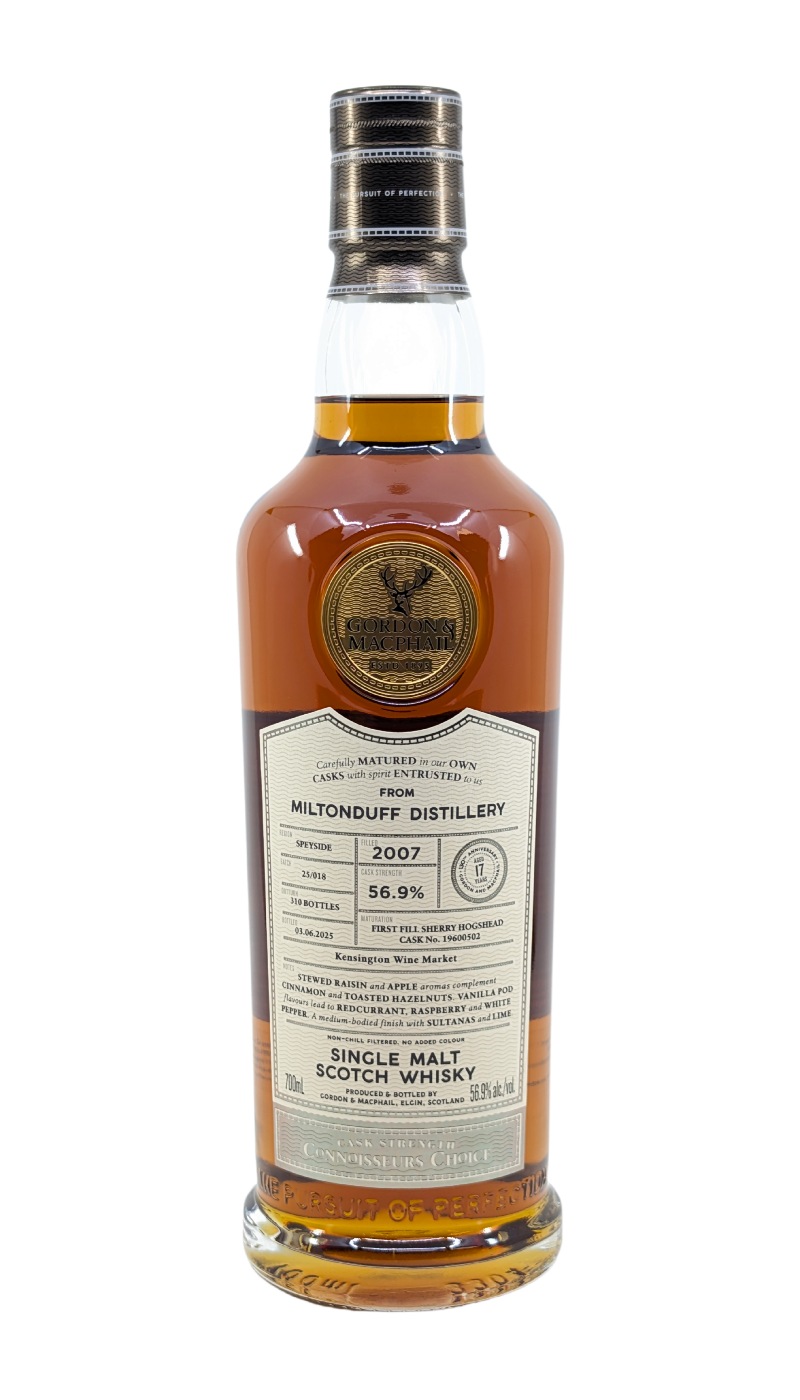
This G&M Miltonduff was selected and bottled exclusively for Kensington Wine Market. Distilled in 2007, this Miltonduff was matured for 17 years in a first fill ex-Sherry hogshead (Cask #19600502) before being bottled at a cask strength of 56.9%
This is only our 2nd ever KWM single cask of Miltonduff, but it is our 16th KWM single cask bottling from Gordon & MacPhail!

$219.99
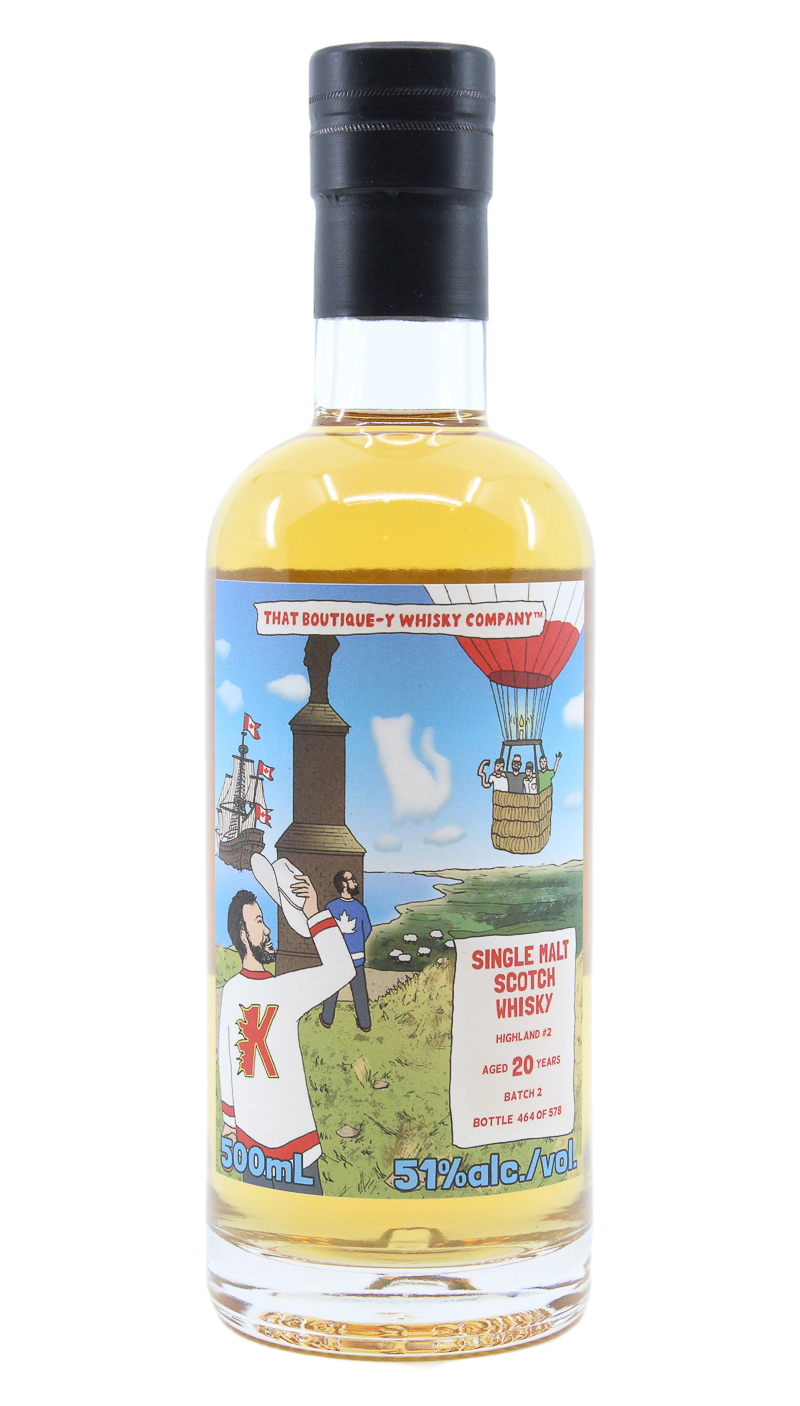
It is finally here... we have been teasing and talking about this whisky for months, and it was worth the wait. We are thrilled to introduce you to our first ever KWM exlcusive single cask from That Boutique-y Whisky Company. Although the bottle doesn't explicitly tell you which "Highland" distillery the whisky is from, there are clues on the label... 578 bottles have been filled exclusively for Kensington Wine Market at 51%. But we have nothing holding us back from telling you that Boutique-y Highland #2 is Clynelish... That's right, this is 20 year old Clynelish!

Andrew's Note on the Whisky & Label
Could that be a cat in the clouds, a Wild Highland Cat perhaps? Is it not strange to see a waxy candle-powered balloon? Incidentally, it is lifting the KWM whisky team aloft. And what of the monument? If we told you it was a controversial monument near the town of Golspie dedicated to the infamous Duke of Sutherland, would that give you all the information you need to know? What Highland Distillery has a Wild Highland Cat as its symbol, a waxy profile, and an infamous Duke as its founder?
This label is a cheeky take on a shared memory, with embellishments, embedded details, and Easter eggs, in the tradition of the best Boutique-y Whisky Company Labels. More importantly, it tells a story, which is personally important to my family. My mother was born into the Clann Gunn in New Glasgow, Nova Scotia. Her ancestors roamed swaths of what is now Caithness and Sutherland in northern Scotland. That is until they were compelled to leave Scotland in the late 18th century, cruelly and rudely displaced to make way for sheep during the early days of the Highland Clearances.
On the label there is a ship at sea, heading to Canada presumably, as hinted at by the flags (the Canadian flag as it is today was only introduced in 1965). On the flat coastal plain at the base of the mountains sheep can be seen grazing. In front of the monument stand a pair of Canadians stand in hockey jerseys. Sam Simmons, Head of Whisky at Atom Brands, and a native Torontonian, stands closest to the monument in what appears to be a hockey jersey. Further back, a native Calgarian, yours truly can be seen waving a white hat, an iconic symbol of "Cowtown", whilst sporting a local hockey team jersey of his own. In the balloon Keith, Evan, Shawn & Curt can be seen waving at Andrew & Sam below. Speaking of those two, what are they doing atop Ben Bhraggie? Funny story that.
When TBWC offered us this cask of Highland Malt, they asked us what we wanted on the label, and I had a cheeky idea. In 2006 I made my first trip to Scotland, and on that trip, I hiked up Ben Bhraggie, a small mountain (really a foothill by Canadian standards) to see the monument of the infamous Duke. Someone had spraypainted the word "Monster" in neon green at the base. When I was sure no one was looking I dropped trow and relieved myself on it. I sent Sam an email of this tale, my connection to the area and my idea for the label. I was sure it was just a little too edgy...
Minutes later my phone was ringing... it was 3 AM in the UK, but Sam wanted to make sure I had seen his reply. He too had hiked Ben Bhraggie in 2005, and he had also paid his own respects to the infamous Duke of Sutherland...
One last little nugget, Keith, who is a personal trainer and headed to Beijing as a Team Canada Skeleton coach, felt his arm didn't look appropriately burly, in an early draft of the label. So we had the artist, Emily Chappell, 'bugs bunny' his arm... In case it isn't already apparent, nothing is sacred (especially when it comes to The Duke of Sutherland and Keith's pipes)!
And the rest as they say is history. On the back of every bottle, That Boutique-y Whisky Company includes the following text: "We are passionate about great whisky, we don't take ourselves too seriously and we LOVE a good story." No wonder these chaps are such a great fit to work with!
May Clynelish's waxiness never wane!
$309.99
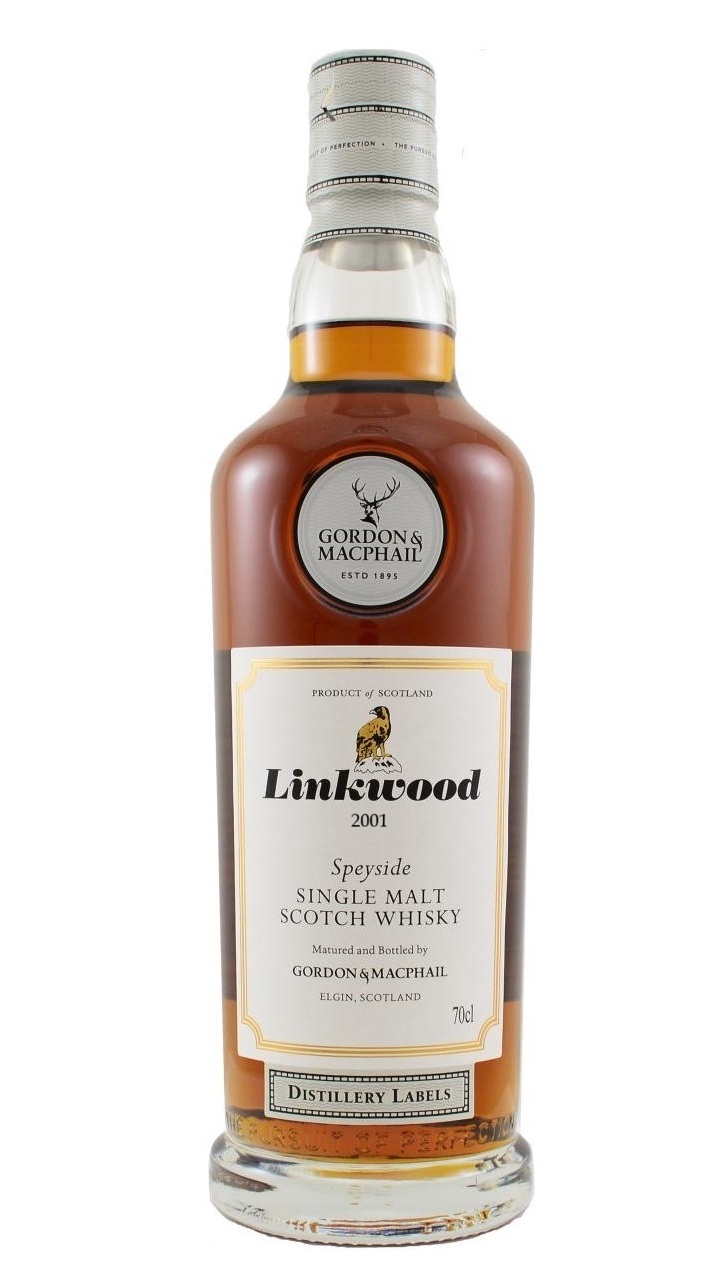
We eagerly await the opportunity to sample this beauty, a 24 year old single sherry cask of Linkwood bottled for Canada under Gordon & MacPhail Distillery's Label. Cask No 17603603 - 312 bottles total, all for Western Canada. It is bottled at 51.9% ABV.
$223.99
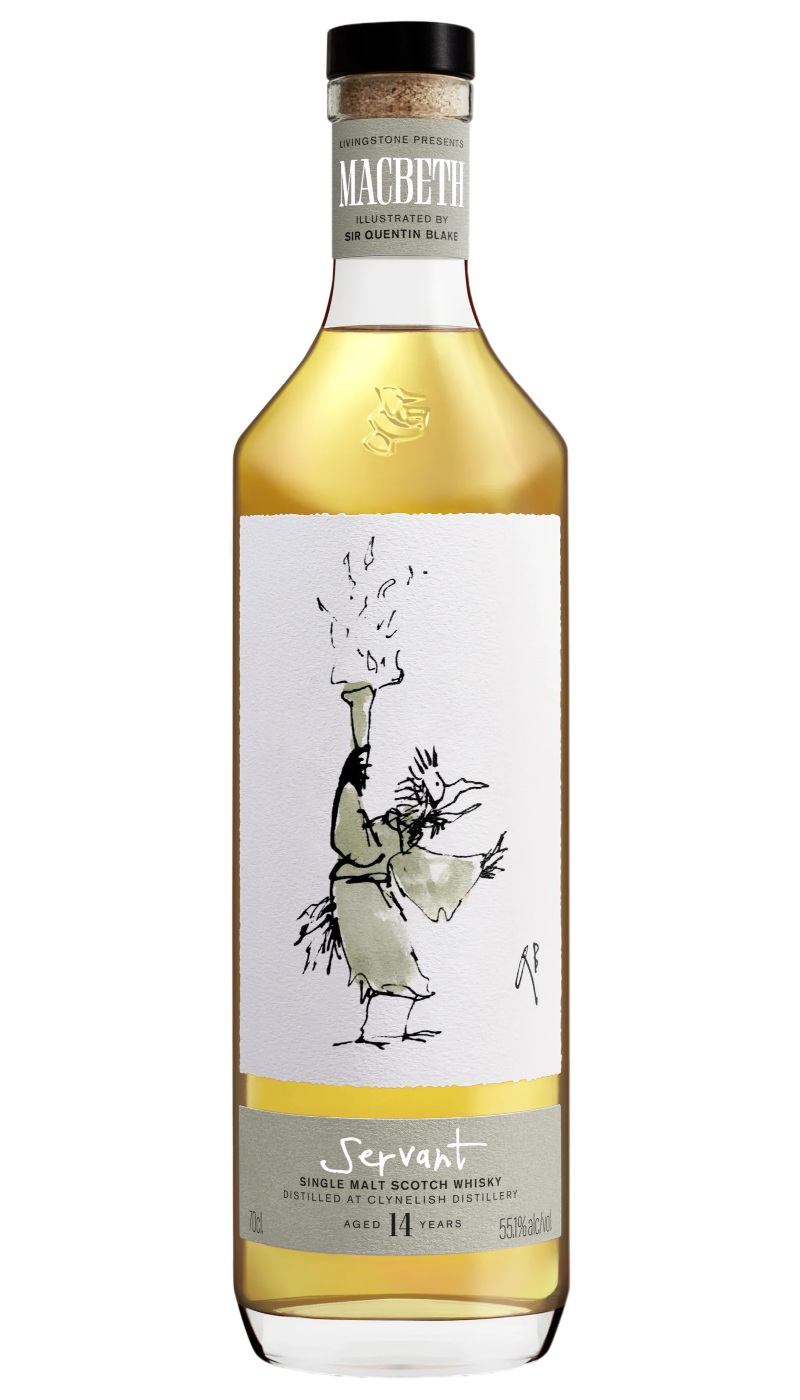
Macbeth Act Two - Clynelish 14 Year - The Household: Servant - 55.1% - First Fill ex-Bourbon Barrels
May Clynelish's waxiness never wane!
87.52pts Whiskybase